The decision that more thinking will not solve
You have the information. You have more than you need. Why the decision still will not come, and why more analysis only deepens the freeze, not the clarity.

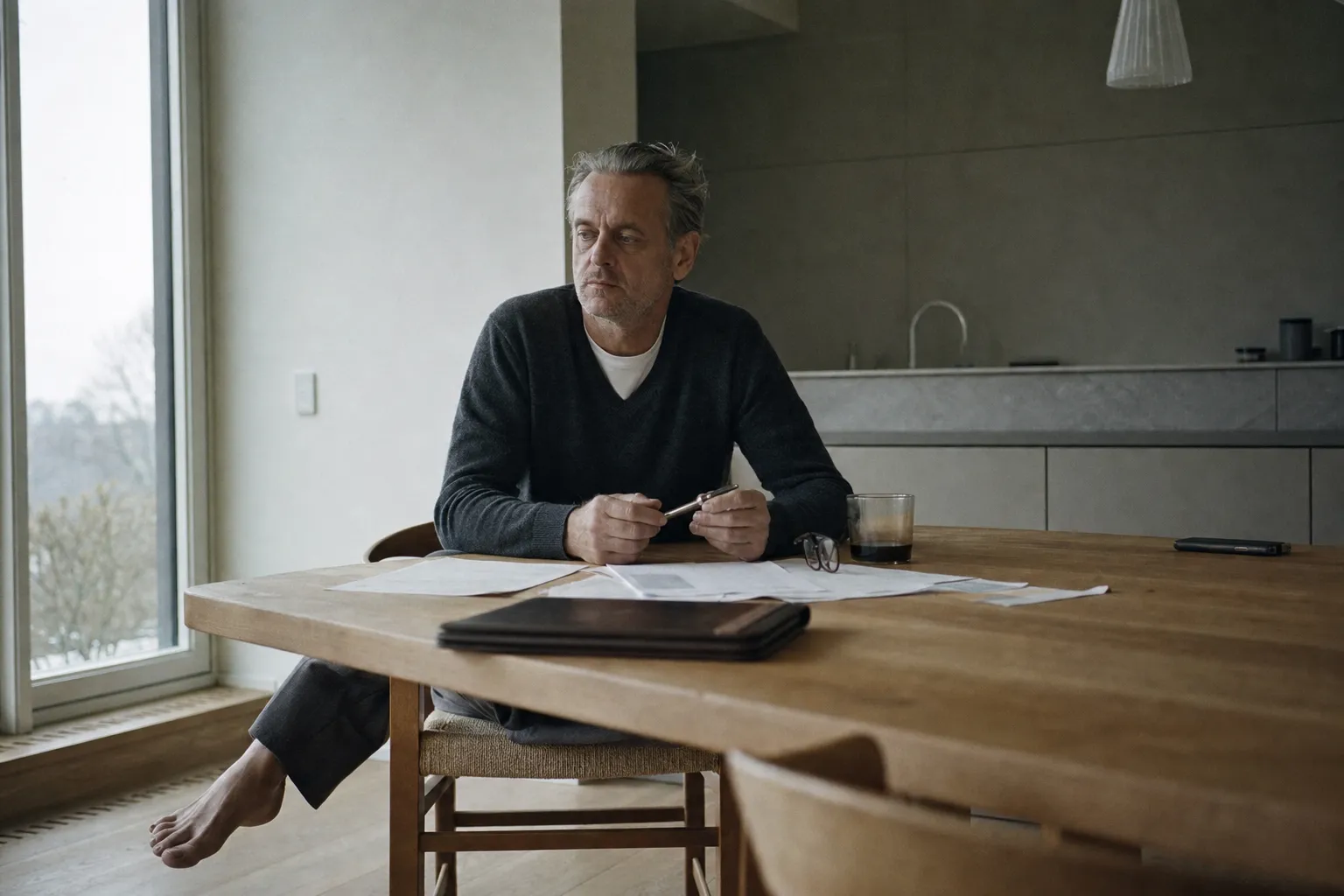
The decision has been sitting with you for weeks. You have the information. You have more than you need. And still, every time you go to make the call, something in you pulls back.
You tell yourself you are being thorough. You are weighing it properly. You will decide when you are sure.
You are never quite sure.
So you gather more. Another opinion. Another set of figures. One more conversation to confirm what you already suspect. The deadline moves. The decision does not.
From the outside it looks like diligence. Careful. Measured. The kind of judgement people have learned to trust you for. Inside it feels like standing at the edge of something and not being able to step.
You have made harder calls than this one. That is the part that confuses you. You can sign off on things that affect hundreds of people without losing sleep. But this particular choice, the one that should be simpler, will not come. "When I am certain, I will move," you tell yourself. The certainty never arrives.
The decision is not waiting on better information
You think the problem is that you do not yet have enough to decide. So you keep feeding the analysis, expecting that at some point the picture will resolve and the answer will surface on its own.
It does not. The thing stopping you was never the gap in the data.
More information does not close that gap. It widens it. Every new input adds another trade-off, another angle, another way the thing could go wrong. What you hoped would bring certainty brings more to weigh. You are not getting closer to a decision. You are building a larger and larger case for why no option is safe.
You have probably watched this happen even as you did it. The clarity you keep waiting for does not arrive in the next report or the next opinion. It arrives, when it arrives at all, in a quiet moment that has nothing to do with how much you gathered. And the next time, you gather again anyway, because gathering feels like progress and committing feels like risk.
The more you analyse, the more there is to be afraid of.
Why more thinking makes it worse
When a choice gets tied to your identity, your nervous system stops treating it as a problem and starts treating it as a threat. Not a business question to be answered. A danger to be survived.
When that switch is on, the body does what it has always done with danger. It slows you down. It scans for what could go wrong. It keeps you from committing to anything that cannot be undone. The hesitation you feel is not poor judgement. It is protection, running exactly as it was built to run.
This is why the standard fix fails. Set a deadline, trust your gut, make a list and pick. That advice assumes the block is in your method. It is wrong about where the block lives. You can run the cleanest framework in the world and still not move, because the framework sits in your thinking and the brake sits in your body. Logic does not reach the part that is holding on.
So the analysis becomes the symptom dressed as the solution. The longer you stay in it, the safer it feels, because as long as you are still deciding you have not yet got it wrong.
Where the freeze actually comes from
The reason a decision reads as danger is rarely the decision itself. It is what the decision is attached to underneath.
Your competence. Your standing. The version of you that does not make mistakes. Somewhere below the surface, the wrong call does not feel like a setback you would recover from. It feels like exposure. Proof of something about you that you have spent a long time keeping out of view.
This is why the stakes never feel proportionate. A choice that should weigh a kilo feels like it weighs a tonne, because you are not carrying the decision. You are carrying everything the decision has come to stand for.
That link was usually made early, long before the boardroom. A time when getting it wrong cost you something that mattered. Approval. Safety. Your place. The nervous system learned that errors are not events, they are verdicts, and it has been protecting you from the next one ever since.
What you call being careful, your body calls staying safe.
I work with people who decide for a living. They run companies, sign off on the numbers, carry the calls no one else will make. In the room they are decisive. Then they reach the one decision that touches something personal, and they stall, and they cannot understand why a person like them cannot simply choose. The block is never in their ability. It is in what the choice has quietly come to mean.
The work is not learning a better way to decide. It is finding where the choice got welded to your worth, and separating the two, so that a decision can be just a decision again.
What changes when it lifts
When the threat tag comes off, the choice stops feeling like a cliff edge. It becomes what it always was. A decision with consequences, some you can live with and some you cannot, none of which can end you.
You feel the shift in your body before your head catches up. The tightness around the thing eases. You can hold the options without the pull to escape back into more analysis. You decide, and it feels like yours, rather than something dragged out of you at the last possible moment under pressure.
This is not recklessness. You still weigh things. You still take them seriously. But the weighing has a floor now. It ends. The question gets answered, you move, and the next morning the world is still standing.
A decision you can make is a decision that no longer threatens you.
If you have been circling the same choice for weeks, gathering, waiting, sure that one more piece of information will finally settle it, the problem is probably not the information. It is that some part of you has decided this choice is not safe to make. Change that, and the deciding takes care of itself.

Subscribe to our newsletter