It looks like kindness. It works like fear.
You say yes before you have decided to, and feel it sink. Why people-pleasing is not really kindness but an old way of staying safe, and where it changes.

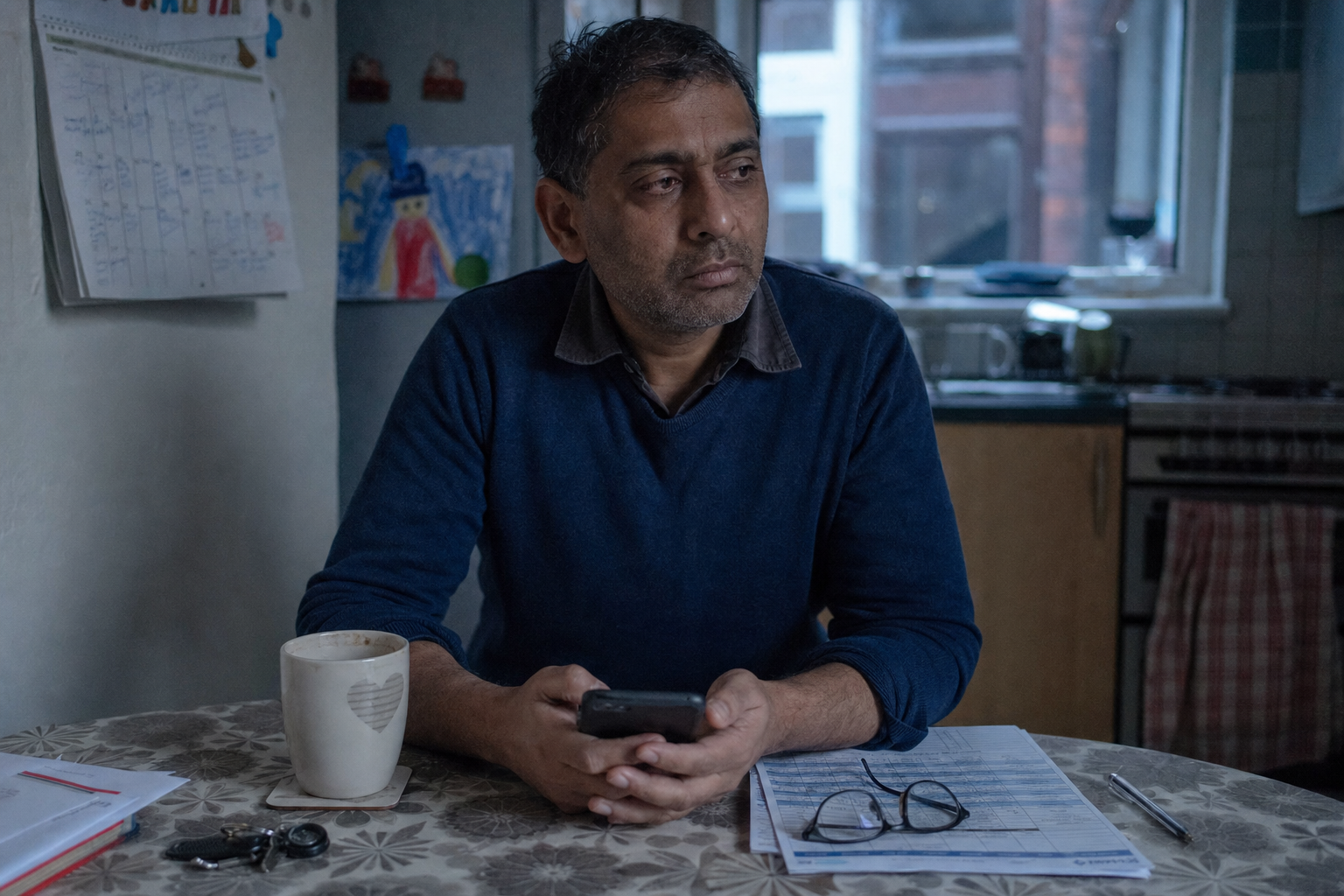
You said yes again.
Someone asked, and the word was out of your mouth before you had time to check whether you had it to give. A favour. An extra shift. A weekend you had quietly hoped to keep. Yes, of course, no problem at all.
Then the door closes, or the call ends, and the other thing arrives. The small sink in the chest. The tally of what you have just signed up for. You are already working out how to make room for something you did not want to do, and did not, in any real sense, agree to.
You call it being helpful. Being easy to get along with. Not wanting to make a fuss. Some of it is that. But you know the difference between a yes you chose and a yes that chose you, and lately most of them have been the second kind.
This is the part that does not make sense from the outside. You are tired in a way sleep does not fix. You are quietly resentful of people who have done nothing except accept what you offered. You apologise before you have done anything wrong. You give and give, and underneath the giving you feel strangely unseen, because the thing you hand over so freely never seems to buy the closeness it is meant to. And still, the next time someone asks, the yes arrives on time, ahead of you, as though it were installed.
Here is what the yes actually is. It is not manners, and it is not generosity, though it wears both well. It is a move you learned to make to stay safe. Behind it is a quick, quiet calculation your body runs before you are aware of it. If I give them what they want, I stay in the room. If I am useful, I am kept. If I am no trouble, no one leaves.
You were not born reaching for the yes. You arrived at it. Think of a child who learned early that the mood of the house depended on them. A parent who was warm when pleased and cold when not. A home where conflict was frightening, or where love came with conditions, or where a small person worked out that the safest place to stand was slightly to one side of their own needs, watching everyone else's. That child did not decide to become accommodating. They became accommodating because it worked. It kept the peace. It kept them close to the people they could not afford to lose.
A nervous system that learns this does not unlearn it when you grow up and the danger passes. It keeps running the same programme in a life that no longer needs it. The friend asking for a lift is not a parent who might withdraw. The colleague who wants cover is not a threat to your survival. But the part of you that answers does not know the difference. It hears a request and it feels a risk, and it does the thing that has always made the risk go away. It says yes.
The word no, to a body trained like yours, still registers as a threat to being kept.
This is why saying no feels so much worse than it should. Turn down a reasonable request and you do not feel a mild social awkwardness. You feel something closer to alarm. A guilt out of all proportion to the thing. A sense that you have done something faintly dangerous and had better put it right quickly. That reaction is not you being weak or over-sensitive. It is an old survival response firing in a situation that does not call for it.
Why the usual advice slides off
The standard advice knows none of this. Set boundaries, it says. Learn to say no. Put yourself first. Practise it in the mirror if you have to. There is nothing wrong with the words. The trouble is where they aim.
Boundary-setting is a technique. It works on the surface, at the level of what you say and do. The pattern it is trying to correct lives a floor below that, in the place that reacts before you have chosen anything. So you can rehearse the firm no, mean it completely, walk into the conversation ready, and feel the old fear rise anyway and hand the person a yes while your intention watches, helpless. You cannot assert your way out of a response that was never a decision in the first place. You override it for a week, white-knuckled, and then you are tired, and the programme runs again, because it was never really switched off. It was only held down.
I work with people who are known as the kind one, the reliable one, the one who never says no, and who are quietly worn out by a reputation they cannot put down. The work is not teaching them to be more assertive. Most of them can be perfectly assertive on behalf of everyone but themselves. It is going back to the place where they first learned that their own needs were a threat to being loved, and changing what that place still believes.
When that shifts, the change is not that you become hard, or start refusing people, or turn into someone who puts themselves first on principle. Nothing so dramatic. It is that the request comes in and the alarm does not. There is a gap where before there was only the reflex, and in that gap you can actually feel whether the answer is yes or no. Sometimes it is still yes, and now it is a real one, given freely, that costs you nothing to give. Sometimes it is no, and the no comes out level, without the guilt chasing it down the street afterwards.
You stop paying for your place in every room. You start to notice that the people worth keeping never needed you to.
The yes was never the problem. It was a good solution, once, to a problem you really had. It kept a frightened child close to the warmth. It just kept running long after the cold had gone, spending you a little more each time someone asked.
You can let it stand down. And the strange part is what happens to your yes when you do. It stops being a toll you pay to stay, and becomes something you actually mean.

Subscribe to our newsletter