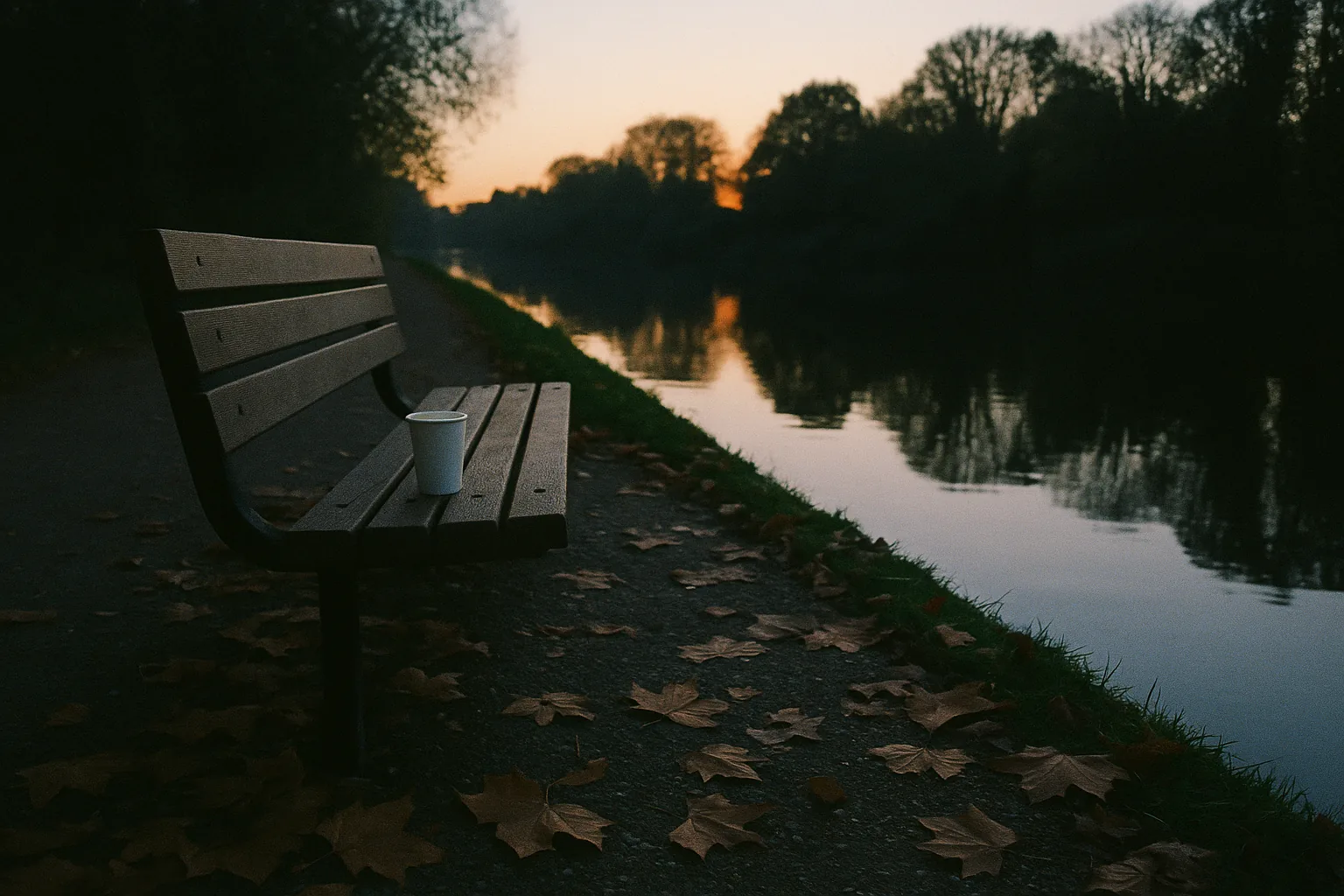
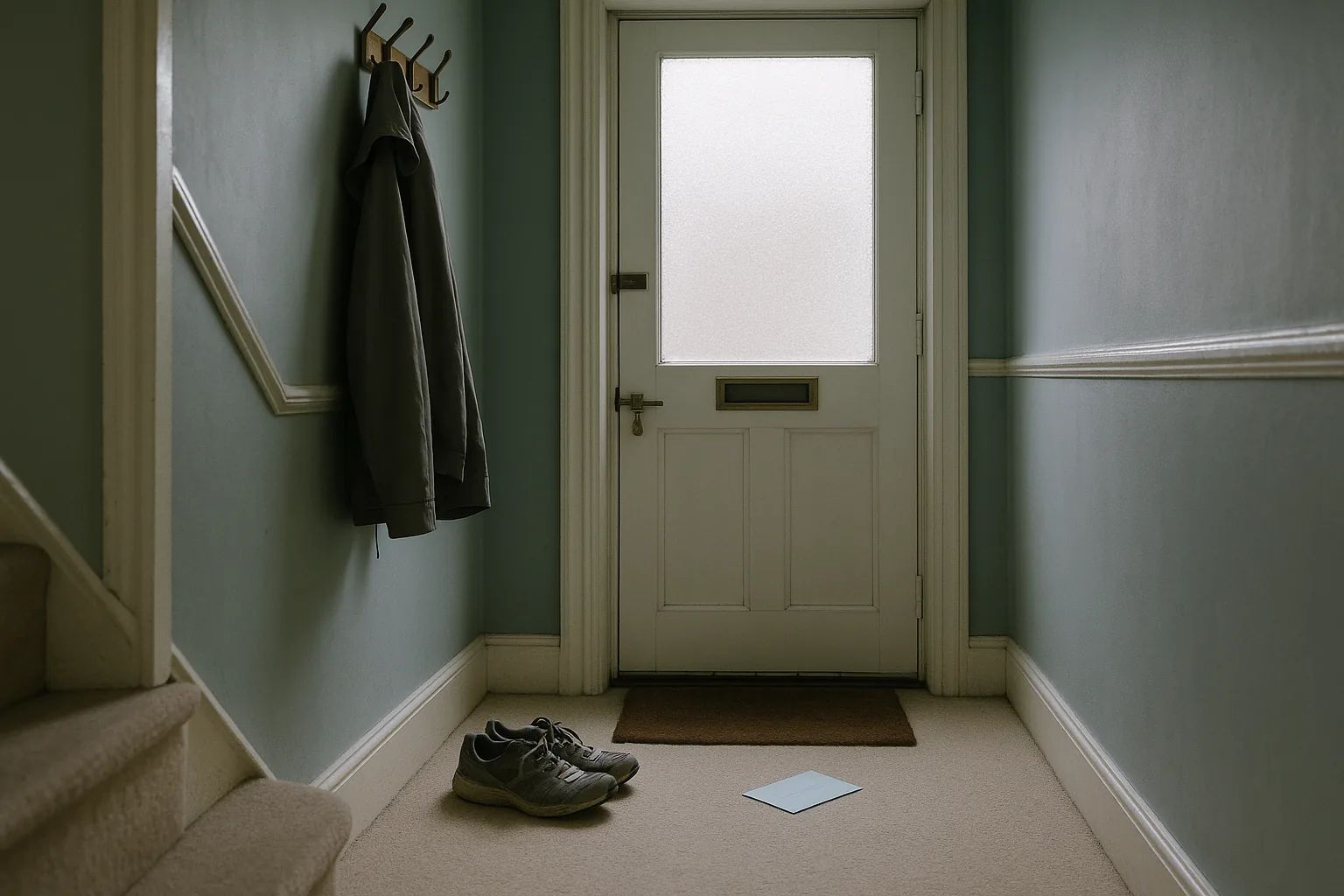
The drink that takes the edge off
It is six o'clock and the glass is poured before you decided to. Why the evening drink is regulation, not weakness, and why cutting down keeps failing.

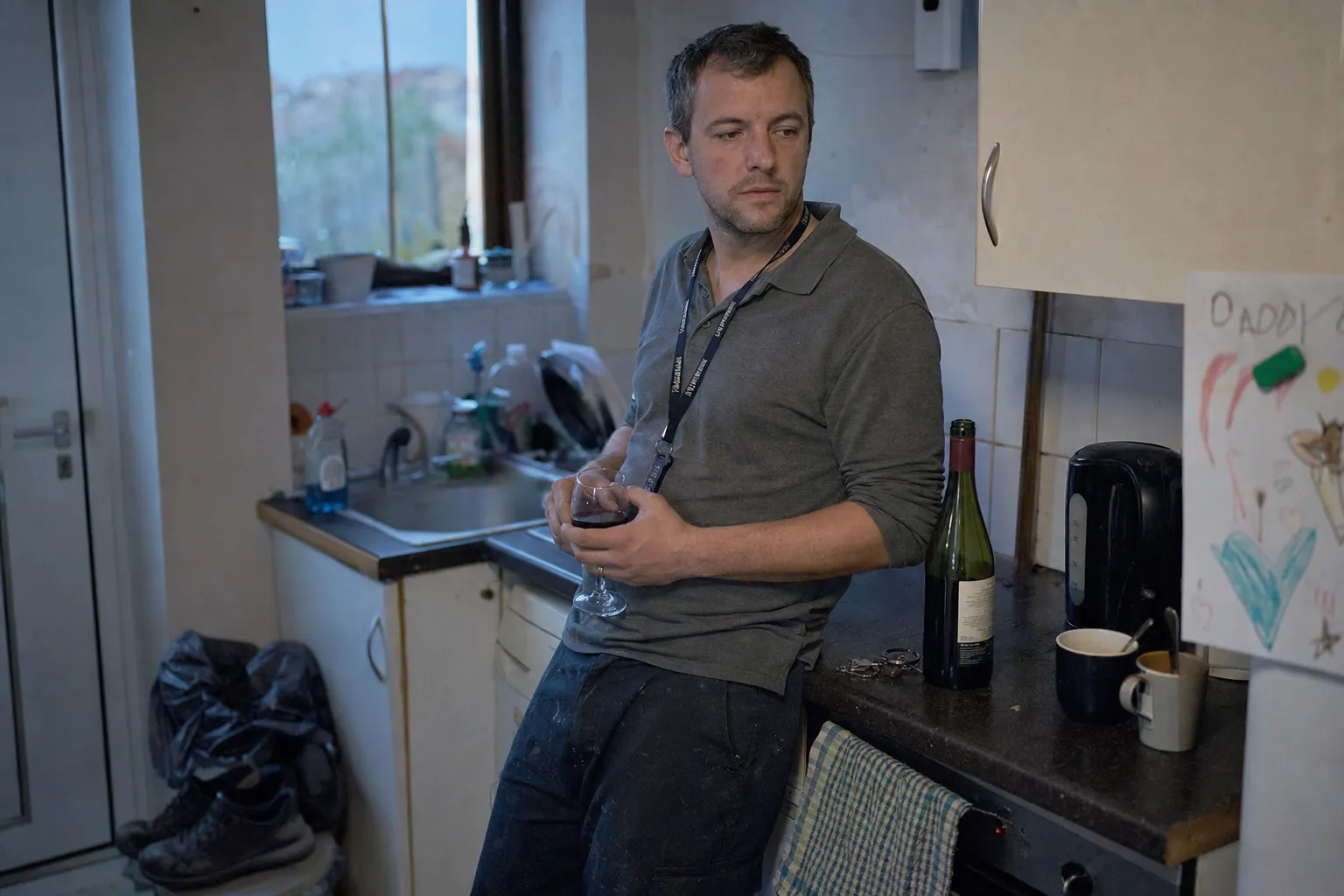
It is six o'clock. The day is technically over, though your head has not caught up yet. You reach into the fridge, or the cupboard, and the glass is poured before you have really decided to pour it.
The first mouthful does something. You feel it land. Your shoulders come down half an inch. The day starts to let go of you.
You would not call it a problem. One glass, most nights. Two on a bad one. Everybody you know does roughly the same.
But you have noticed the clock. How the glass arrives at the same time each evening. How a night without it feels faintly wrong, like a step missed on a staircase. How the thought of stopping for a month makes something in you tighten before you have even tried.
The drink is doing a job. That is the part most people miss about their own drinking. They look at the amount and ask whether it is too much. The more useful question is what the drink is for.
That first glass is not really about taste, and it is not really about pleasure. It is about a switch. After a day spent slightly braced, slightly on, carrying the low hum of everything you are holding, the drink is the one thing that reliably turns the hum down. That is regulation, not indulgence. You found a way to come down, and it works every time, and so you use it every time.
Seen that way, the habit makes complete sense. It is not weakness and it is not greed. It is a body doing what bodies do, reaching for the fastest reliable route back to calm. The trouble is only that the route has a cost, the cost grows quietly, and the thing you reach for to feel better is wired into the very state that makes you reach.
This is why it sits at the same hour. The body learns the route. It spends the day in a state it cannot drop on its own, and it has come to expect that the drop arrives in a glass. By six o'clock the wanting is not really for alcohol. It is for the quiet the alcohol brings.
Somewhere along the way it stopped being a decision and became a default. You did not choose a habit so much as repeat a relief until the repetition wore a groove. The evening drink is not a moral lapse you keep making. It is a learned answer to a question your body asks every single day. How do I come down from this.
Cutting down treats the wrong thing
Every piece of standard advice points at the drinking. Count your units. Have three dry nights a week. Swap to alcohol-free. Use a tracking app. Get through Dry January and prove to yourself you can.
None of it is wrong, exactly. It just aims at the wrong layer. It treats the glass as the thing to manage, when the glass is only the method. Take the drink away and leave the state underneath untouched, and the body does not relax. It goes looking. The tension you were quieting does not disappear because you stopped quieting it. It gets louder. It finds the biscuit tin, the phone, the online basket, the long list of jobs that keep you busy enough not to feel it. Or it simply waits, patient, until a hard week thins the willpower and the glass comes back, usually with company.
There is a quieter version of the same trap. The amount creeps. What settled you a year ago does not quite settle you now, so the measure grows, or the second glass becomes ordinary, and you tell yourself it is the stress of a particular season. It is not really the season. The body adjusts to whatever you give it and asks for a little more of the same, because the load it is managing has not changed and the only tool you have handed it is this one.
You have probably lived this cycle. A stretch of discipline. A clean fortnight. A bit of quiet pride. And then a bad week, and the old route reopens as if it never closed, and the shame arrives on top, which is its own kind of tension looking to be quieted.
Willpower can stop a behaviour for a while. It cannot regulate a nervous system.
The reason it keeps failing is not that you lack discipline. It is that discipline is being asked to do a job it was never built for. The drink was solving something real. Until that something is solved another way, the pull stays exactly where it is.
What the drink is actually answering
Underneath the evening glass is usually a day that never properly settles. A baseline of tension you have carried so long it does not feel like tension any more. It feels like just how you are. The bracing for the next demand. The keeping of the lid on. The small constant readiness that never quite switches off on its own.
Some people have carried that state since childhood, when the house was not a safe place to relax in and staying slightly alert was the sensible thing to do. The body kept the setting. Years later it is still on, still scanning, still refusing to come down at the end of a day that holds no real threat at all. And the drink, when it arrived, did the one thing nothing else had managed. It reached the off-switch directly.
For others there was no early alarm at all, just years of accumulated load that never got unloaded. A job that asks for more than it returns. A house full of people who need you. A run of losses you handled by keeping moving. The tension did not come from one place. It gathered. And the glass became the only full stop in a day that otherwise has none.
I work with people who pour the first drink before they have taken their coat off. Most of them do not think of themselves as having a problem, and in the ordinary sense they do not. They are parents, tradespeople, people who hold a great deal together and have found one thing that lets them put it down for an hour. The work is never really about the drink. It is about the state the drink is reaching, and teaching the body another way to get there, so the glass stops being the only door out of the day.
When the underlying state actually comes down, something quiet happens to the wanting. The six o'clock pull loosens its grip. The drink stops being load-bearing. You might still have a glass of wine because you like the wine, which is a wholly different thing from needing it to end the day. The choice comes back. That is the change. Not white-knuckle abstinence, held together by force. The simple return of a choice that the tension had quietly taken from you.
None of this happens by deciding harder. You cannot think your way out of a body state, which is why the years of telling yourself to drink less have changed so little. The shift happens lower down, underneath the talking, at the level where the tension was set in the first place. When that settles, you are not fighting the pull any more. There is simply less to pull against.
The clock will still read six. The day will still end. But the reach for the glass stops being automatic, and you get to decide, for the first time in a long while, whether you actually want it.

Subscribe to our newsletter