The body you cannot make peace with
You can change the body and still hate the mirror. Body image discomfort is rarely about how you look. Here is what it is really about, and what shifts it.

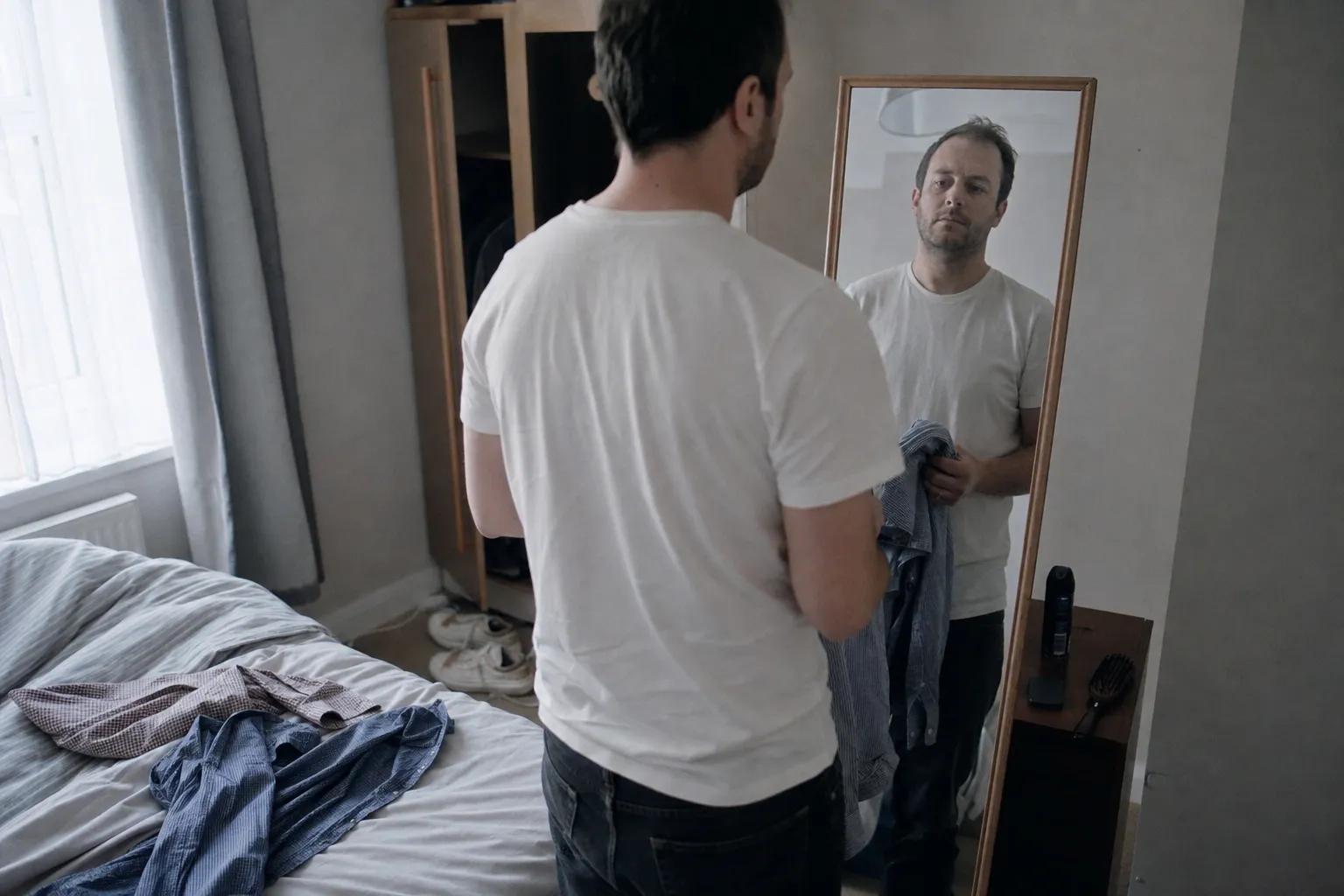
The photo you ask someone to take again. The outfit changed twice before you leave the house. The reflection you catch in a shop window and look away from. The angle you hold the phone at so the face looking back is one you can stand.
You have a running commentary about your own body. It has been going so long you no longer hear it as commentary. It just sounds like the truth.
Most people are sure they know what this is. They think the discomfort is about the body. Change the body and the feeling will follow. So you lose the weight, or build the muscle, or fix whatever you decided was the problem. For a week or two it eases. Then your eye finds something else. A new flaw, often in the same place the old one used to be.
The body changed. The feeling did not.
What the mirror is actually doing
A mirror feels like it shows you what is there. It does not. When you look, you are not taking in a neutral image. You are running a check against a standard, and the standard was set a long time ago, usually not by you.
The feeling tends to arrive before the looking. You walk to the mirror already braced. You bring the verdict with you, and the mirror hands it back. Then you call what you feel an observation, as though the glass delivered the bad news rather than confirming what you had already carried in.
Notice how selective it is. You can stand next to someone and see them clearly, kindly, without scoring a single part of them. The same eye turned on your own body becomes a measuring tape. That is not vision. That is judgement, and it only switches on when the subject is you.
For a lot of people this starts young. A comment from a parent about a second helping. A nickname at school that stuck to your skin. A changing room, a swimming lesson, a moment you were made to feel too much of something, or not enough of it. The body became the place where worth got measured. It learned that early, and it never updated the figure. You grew up. The standard stayed exactly where it was set.
Why fixing the body does not fix it
So you set about the body. The effort is real. The discipline is real. And each time you change something, there is a flicker of relief.
But look closely at that relief. It is the relief of having done something about the anxiety, not the relief of being at peace with yourself. The two feel similar for a moment and then part ways. Within days the eye is roaming again, because the discomfort was never an accurate report on how you look. It was a feeling about yourself with nowhere to go, and the body is always available to take it. The body is with you. It can always be found wanting.
This is why the goalposts move. Reach the weight you fixed on and the number stops mattering almost the moment you hit it. Some new fault rises to take its place. The thing you were certain was the problem turns out to have been a stand-in. The feeling needed somewhere to live, and it simply moved house.
I work with people who have spent years at war with how they look. Not vain people. Ordinary people, who cannot enjoy a holiday for thinking about the photographs, who get dressed and undressed three times before going out and then would rather stay home. Underneath it, the body is rarely the thing the fight is about.
What sits beneath the body talk is usually an older belief. That you are too much. That you are not enough. That your place has to be earned by looking a certain way, and could be lost if you stop earning it. The body is just the screen all of that gets played out on. It is the most convenient screen there is, because you can see it, change it, and punish it, and for a while that feels like progress.
The comparison habit feeds straight into this. You hold yourself against a feed of edited, filtered, best-angle images and call the gap a fact about your body. It is not a fact. It is a rigged contest you enter dozens of times a day without realising you have agreed to play.
What changes when it shifts
When the belief underneath it changes, the mirror goes quiet. Not because you suddenly love every angle. Because the body stops being the scoreboard. You can look and see a body. You catch your reflection and keep walking. The commentary has nothing left to work with.
This is a lower bar than the one you have been failing to clear. You do not have to arrive at some flawless self-acceptance, beaming at yourself in the glass. You only need the body to stop being the thing that decides whether the day is allowed to be a good one. That is a far smaller and far more reachable change than learning to adore a reflection you have spent decades inspecting for faults.
It surprises people, how much of life this gives back. The morning that does not start with an audit. The meal eaten without a running tally. The photograph you are simply in, rather than braced against. Energy you had no idea was being spent comes back to you, because the patrol you kept up every waking hour was costing more than you ever stopped to count.
The work is not really about learning to like what you see. It is about the standard you measure against, and who put it there, and whether it was ever yours to begin with.
Most people believe they have to change the body to end the war. It runs the other way. The war ends first, and then the body is just a body. It was always just a body. You were the only one keeping score.

Subscribe to our newsletter