Antidepressants can quiet the feeling. They cannot always reach the cause.
Half the people on antidepressants have taken them for over a year. Medication can steady the feeling. Whether it reaches the cause is another matter.

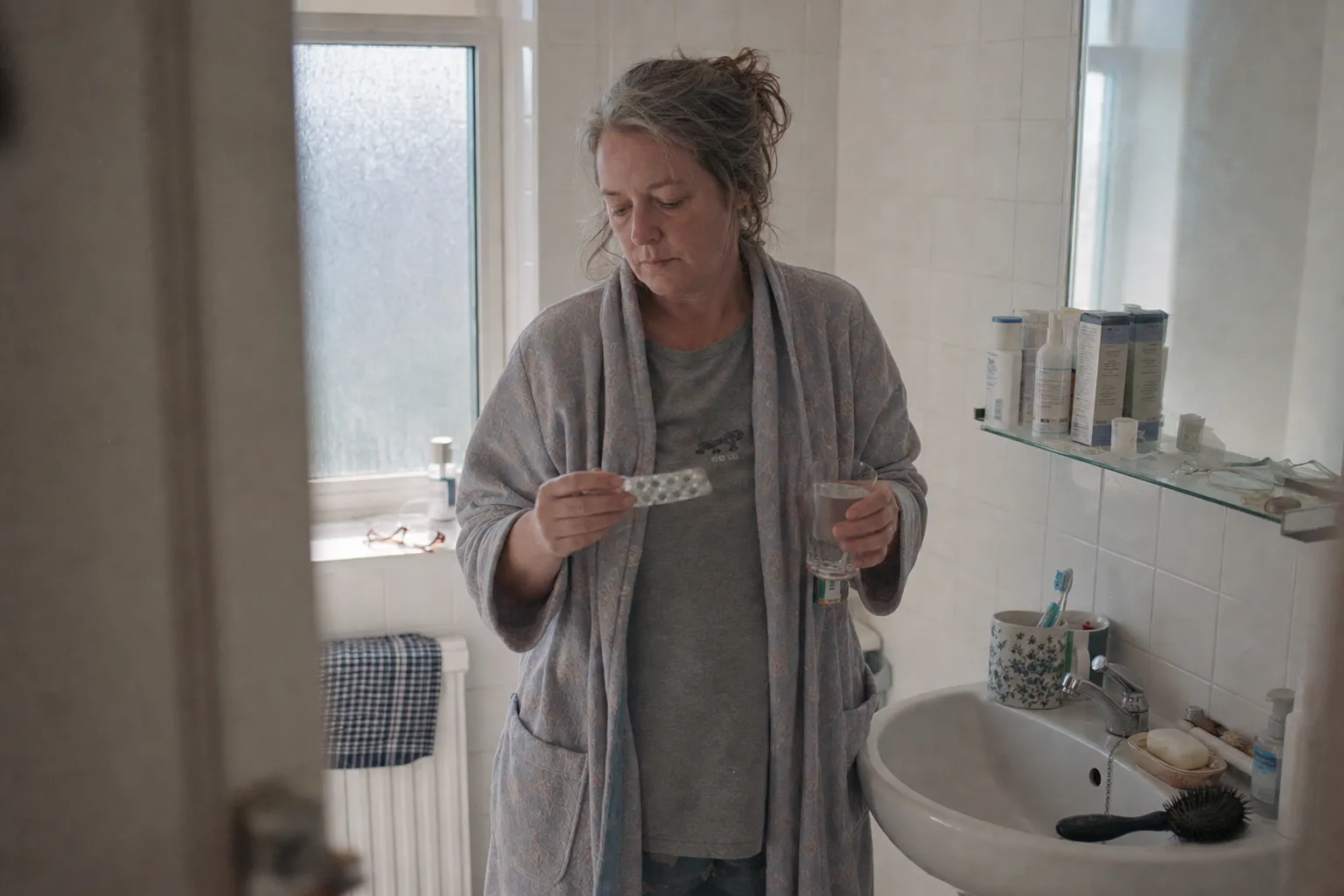
You were in a bad way when they first prescribed them. That part gets lost in the arguments about antidepressants, so it is worth saying before anything else. You were not coping. You could not see a way through. The tablets helped. The mornings became possible again, and for a while that was everything.
Nobody who has been there needs persuading that the medication mattered. It did. For a great many people it is the reason they are still here.
Then the years pass.
You are still taking them. You are not in crisis the way you were, and you cannot quite remember the last time you asked yourself why you are still on them. The prescription renews itself. The pharmacy knows your name. And underneath there is a quiet question you tend not to look at directly. Whether they are still doing anything. What would happen if you stopped.
You are not alone in that. Roughly half the people taking antidepressants in this country have been taking them for more than a year, many for far longer than anyone first intended. Prescriptions have climbed year after year. The people who study this have started calling it a quiet dependence, not on the drug exactly, but on a level of functioning nobody wants to risk losing.
You know the feeling even if you have never put words to it. The tablet is not making you happy. It has not made you happy in a long time. It has made you level, which after a bad enough spell can look a great deal like the same thing. Level is where you have lived for so long now that you have half forgotten there was ever anywhere else to stand.
There is a loud argument about what that means.
One side says the tablets are handed out too easily. That ordinary unhappiness has been turned into an illness. That a pill is cheaper and quicker than a waiting list, so a pill is what people get. The other side says that kind of talk is dangerous. That it shames people into stopping medication they need. That for plenty of people the alternative to the tablet is not insight, it is the floor.
Both of them are right about something, and the argument mostly generates heat because each side is answering a different person.
Real depression is not low mood in a costume. For some people it is a genuine chemical weight, and the tablets lift it, and the notion that they should simply think their way clear is both cruel and wrong. For those people, medication is not a crutch. It is treatment. At the same time it is plainly true that large numbers of people are years into a prescription without anyone having asked what the medication is actually holding in place.
That question is where the work sits.
What the tablet holds, and what it does not
Picture the medication as scaffolding. When a wall becomes unsafe, you put scaffolding up so the building can still be used while the real repair is done. The scaffolding is not the repair. It holds things steady so the repair becomes possible. Nobody stands back, looks at the scaffolding, and calls it a finished wall.
Antidepressants do something close to that. They can steady you enough to sleep, to eat, to get to work, to stop the fall. That steadiness is not a small thing. For a lot of people it is the very thing that makes any other change possible, because you cannot look clearly at what is wrong while you are drowning.
But if the repair never happens, the scaffolding stays up. Year after year. Not because the medicine failed, but because it was only ever meant to hold the space while something underneath got attended to, and nothing underneath got attended to. The crisis passed, everyone exhaled, and the appointment where someone might have asked why it happened never came.
This is why coming off can feel so frightening, and why the fear is not proof that you will always need the tablet. It is not weakness. It is not addiction in the way people mean the word. It is that the medication became the only thing standing between you and whatever it was holding back. Take the scaffolding down before the wall is repaired, and of course the wall feels unsafe. It is unsafe. The fear is real. It is pointing at a repair that never got done, not at some permanent flaw in you.
I work with people who have taken medication for years and were never once asked what set the whole thing off. A bereavement they never fully felt. A childhood that taught them their needs were an inconvenience. A marriage that went quietly wrong a decade before it ended. The tablets quieted the feeling. The thing that produced the feeling stayed exactly where it was, running underneath, waiting.
When that root finally gets looked at, something moves. The medication stops being the entire floor you are standing on. For some people that means they can sit down with their doctor and taper slowly, and it goes far more gently than they had feared. For others it means staying on the tablets and, for the first time, understanding what they were for. Both of those are good outcomes. Coming off is not a trophy. Staying on is not a failure.
None of this is an argument for stopping anything. Do not change a dose or come off a medication on the strength of something you read. That is a conversation for you and your doctor, and for many people the honest answer is that the tablets should stay, for a long time or even for good. Medication and the deeper work are not rivals. They can work together. The tablet holds the wall while the wall gets repaired.
The tablets were never the problem. They did what they were made to do. They held you steady on mornings you could not have managed otherwise. They simply cannot walk into the room where the trouble began and turn the light on. That was always going to be someone's work, and it was never going to be the pill's.

Subscribe to our newsletter