Why your body keeps watching after coercive control has ended
Years after leaving, the phone still gets checked before the door is answered. This is the job your body learned, why it carries on, and what I do.

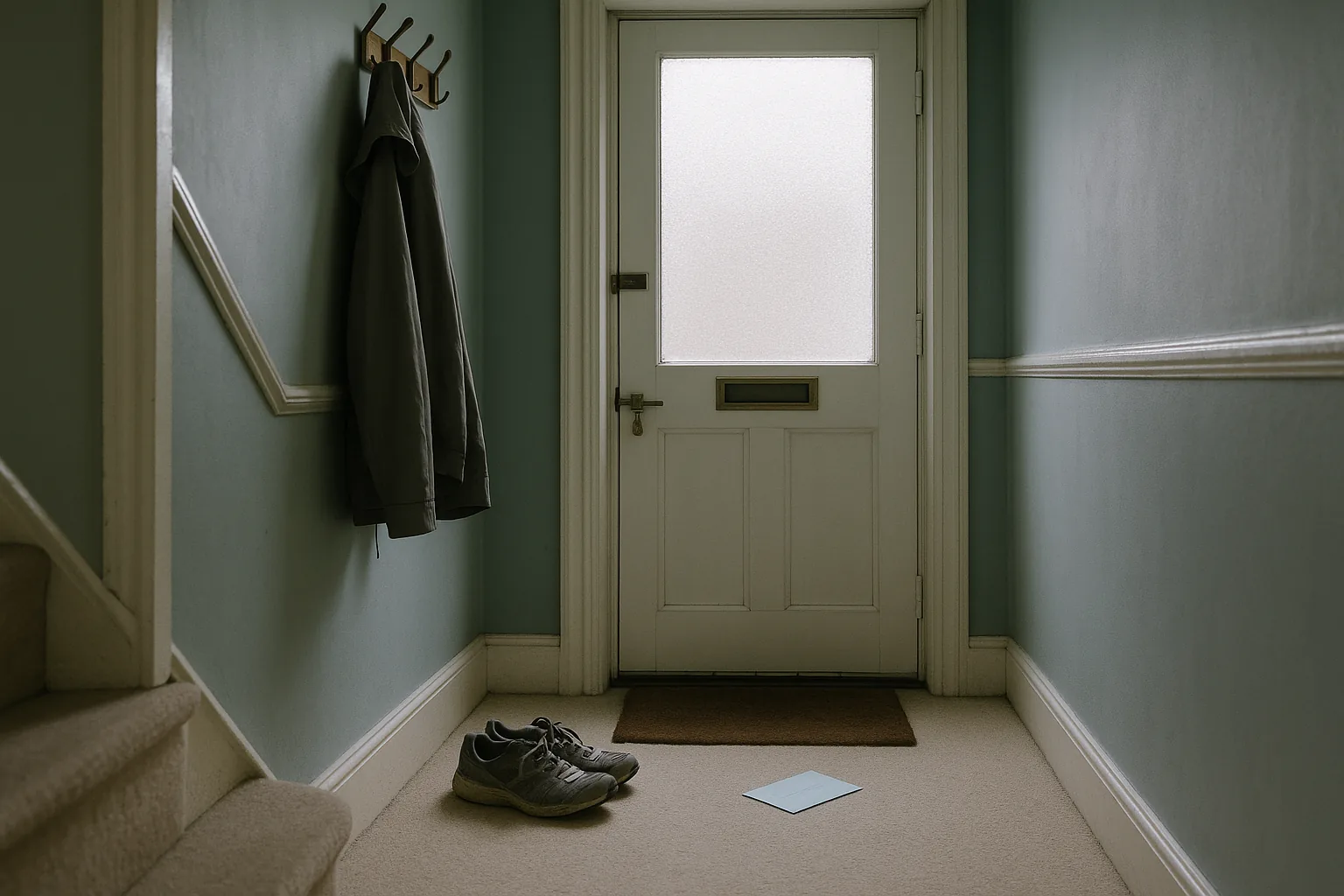
Two years after leaving, your body is still doing a job it was given while you were living there. Nobody has told it the job is over.
The job was prediction. When one person decides what is allowed and the rules shift without warning, you learn to read everything.
The sound of a key in the door. The weight of a footstep in the hall. The length of a pause before someone answers.
You did not choose to learn this. Your body did it, because the information kept you a step ahead of trouble.
A good watcher gets faster. Over months and years the reading moves out of your thinking and into something automatic, below choice. It runs before you have noticed it start, the way you hear your own name across a crowded room.
Why it carries on after you leave
Leaving changed your address. It did not send a message to the part of you that handles danger.
That part learns by repetition. Every time the reading proved useful, it was strengthened. After years of that, it has a great deal of evidence on its side and a few kind sentences from friends on the other.
Here is how it plays out inside you. A sound or a tone of voice reaches the alarm system first and your thinking second, by a fraction of a second. By the time you have worked out it was only the post, your heart is already going and your hands have already gone cold.
Coercive control adds a second difficulty. There was rarely one clear moment you could point to and say, that was the line. It built slowly, so the body has no clear moment when it ended either, and nothing marks the day the watching can stop.
The watching is a skill your body learned because it worked. It keeps running because nobody switched it off when the danger ended.
A 2024 study in Australia talked in depth with sixteen women who had lived with coercive control and used domestic abuse services. Nearly all had separated from the partner. Every one of them described lasting effects: nightmares, hypervigilance, self-blame, shame, trouble concentrating.
Many said the psychological abuse had been as harmful as physical violence, or more so, and that support was harder to find when there was no physical violence.
It is a small study, from one country, with women recruited through services, so it cannot speak for everyone. It does match what I hear. Coercive control has been a criminal offence in England and Wales since 2015, but plenty of people are still living with the effects before they have a word for them.
What it feels like day to day
The phone buzzes on the table and your whole body answers before you have looked at it. You check your phone before you open the door, in case there is something you need to know first. You stand in a friend's hallway and read the mood of the kitchen before you walk in.
Sleep is light. A boiler clicks or a car slows outside and you are awake, listening, and it takes a long time to come back down. The apology arrives before you have done anything: "sorry, I was only going to" said to a shop assistant, or a colleague, or a neighbour.
It is tiring in a way that is hard to explain. Watching is work, and you do it all day without anyone noticing.
Friends keep telling you that you are safe now. They mean it kindly.
Your friends are right that you are safe. Your body is going by a different set of evidence.
Whatever you carry about how long it took to see any of this, the shame belongs with the person who made the rules. You adapted to a situation that was built to make you adapt.
What I do with it
I take a history first, and I do not rush it. You tell me what you choose to, in your own order. The detail of what happened is yours to keep. I need to know what the watching looks like now: which sounds, which rooms, which hour of the night.
Most people are surprised that the scanning has a pattern. It is stronger at the end of a working day, stronger around certain tones of voice, stronger when they are tired. Many tell me they feel stupid for still doing it, two years on, and I hear that most weeks. Once you can see the pattern, the checking stops feeling like something wrong with you.
Then I use clinical hypnotherapy for the automatic part. Hypnotherapy works beneath conscious thinking, where the scanning sits, so it reaches what reasoning cannot. You stay aware throughout. I work on what your body does when a phone buzzes or a house goes quiet, and teach it a different response, one that fits the life you have now.
Where a specific memory still sets the alarm off, I use EMDR. That stands for eye movement desensitisation and reprocessing. You bring the memory to mind briefly while following my hand from side to side, and the memory gets stored as something that happened then, not something happening now. I work only with memories you already have.
If you need to speak to someone today, the National Domestic Abuse Helpline is open 24 hours a day on 0808 2000 247.
The first change people mention is usually small and specific. The phone buzzes and there is a gap before the body reacts. The waking at small noises gets shorter, or sleep goes a little deeper. The apology comes a beat later, and then sometimes does not come at all.
I cannot give you a timeline and I do not promise one. People change at different speeds, and I do not set a number of sessions in advance. In the first sessions I take the history, and you and I agree a starting point, usually the one reaction that costs you most in an ordinary week.

Subscribe to our newsletter