They have not let you down. You are braced for it anyway.
You trust them with your head, yet some part of you still braces for the betrayal. Why trust issues are not about your partner, and what settles them.

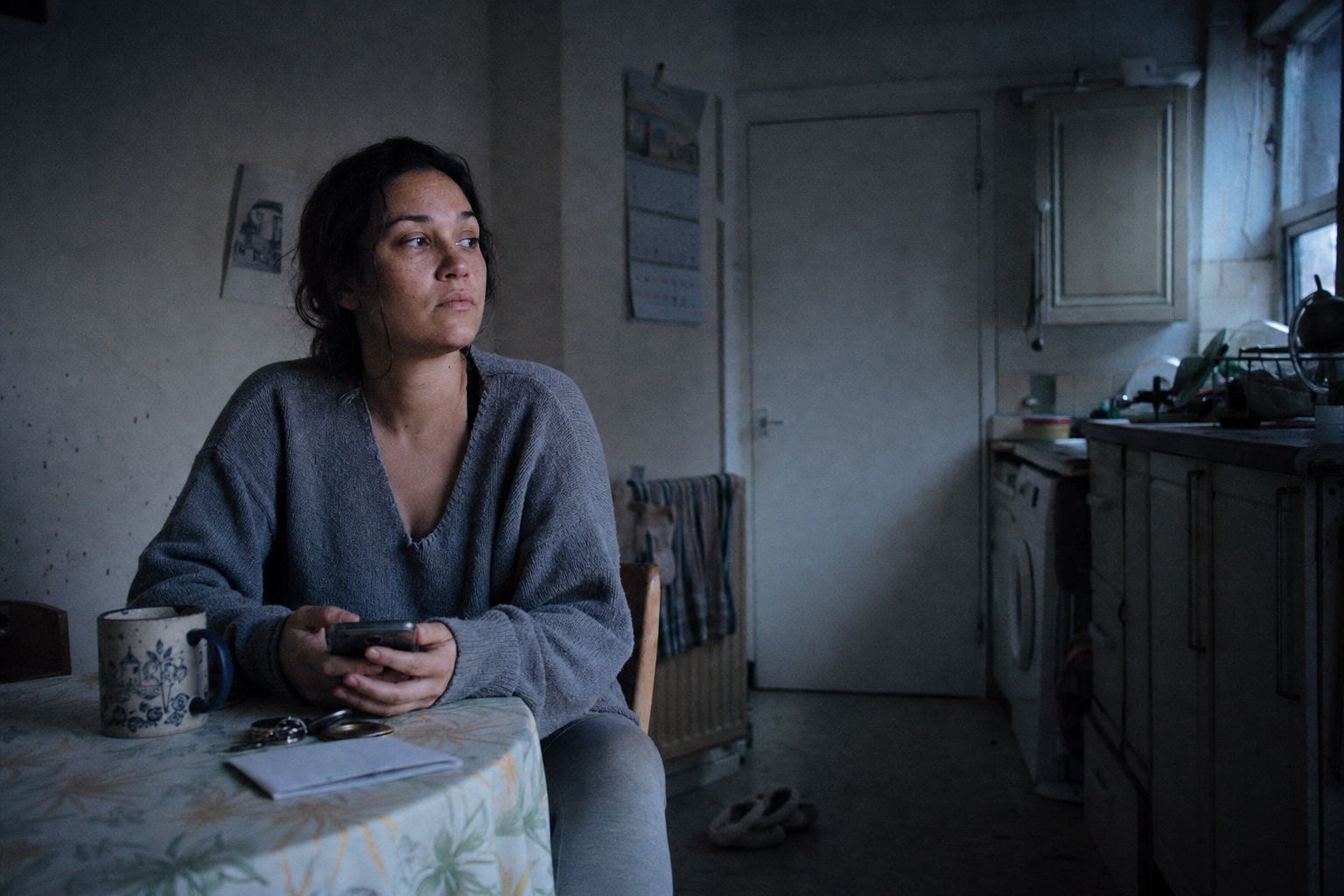
Your partner's name lights up the screen. A short message. Running late, back about eight.
Most people read that and go back to what they were doing. You read it twice. Something in your chest has already shifted.
By the time they come through the door you have built the whole thing. Who they were with. What the lateness means. What it is the start of. They have done nothing. You know they have done nothing. The bracing arrives anyway.
This is the part that catches people out. It is not that your partner keeps letting you down. Often they are steady, present, exactly where they said they would be. And still some part of you sits forward in the chair, waiting for the moment it all turns out to be a story they were telling you.
You call it trust issues. The more honest word is bracing.
Trust is not a decision you make with the rational part of your mind. You can decide, fully and sincerely, that this person is safe. You can lay out the evidence. None of it reaches the place where the bracing lives. That place does not deal in evidence. It deals in expectation, and the expectation was set long before this person arrived.
Somewhere behind you there is a template. A parent who was warm and then, without warning, was not. Someone who left and did not explain. A house where the mood could turn between one room and the next, so you learned to read the air before you let yourself relax into it. The details differ from person to person. The lesson landed the same way. Safety is the moment before the drop. Do not let it fool you.
So here you are with someone who has given you no reason to doubt them, doubting them daily. Not because of anything they have done. Because of what some younger part of you concluded, correctly at the time, about what being close to a person costs.
None of this is a flaw in your character. It is a skill, learned early, that once kept you safe. A child who could feel the shift coming got a head start on the hurt. You are running that same early warning system now, in a house where the alarm has nothing real to detect, and it is wearing out both you and the person beside you.
The bracing believes it is helping. The logic underneath it is simple. If you see the betrayal coming, it cannot flatten you the way the first one did. So you stay alert. You weigh the tone of a message. You notice the half second before they answer a question. You keep a portion of yourself in reserve, the part that would be hardest to break, just in case you need it intact.
It feels like wisdom. It feels like the sensible thing a person does after being hurt. But look at what it actually delivers. The bracing does not prevent the pain it is so afraid of. It hands you a smaller dose of that pain every day instead. You are not being betrayed. You are rehearsing betrayal on a quiet loop, in a relationship where nothing is going wrong, and calling it being careful.
It rarely looks dramatic from the outside. It looks like a slightly too long pause when they say they love you. A question asked in a light voice that is not light at all. A part of you standing at the window of your own relationship, watching the street, never quite coming in to sit down.
He is being too nice, what does he want. She has gone quiet, here it comes. The lines run so fast you barely hear them as thoughts. They feel like perception. They are memory wearing the costume of perception.
From the other side it is bewildering. They tell the truth and are met with suspicion. They turn up and are quietly tested. Over time even a patient person starts to feel that nothing they do will ever be quite enough, and the distance you were braced against begins, slowly, to form. The bracing has a way of building the very thing it was meant to guard against.
The usual advice is to communicate more. Name what you need. Ask for reassurance. There is a place for that, and good partners give it gladly. But reassurance behaves like every other quick fix. It settles the doubt for an hour. Then the doubt grows back, often a little hungrier, because reassurance feeds the pattern without touching it. Anyone who has tried to quiet a jealous thought by checking one more time knows exactly how that night ends.
The other common line is that you simply need to learn to trust, as though trust were a muscle you have been too lazy to use. You are not failing to trust. You are doing precisely what you were trained to do, with real skill, against your own happiness.
I work with people who cannot relax into a relationship that is, by every measure they can name, good. People who keep picking at something solid because solid has never once felt safe to them. The work is not about persuading them their partner is trustworthy. They usually know that already, on paper. It is about going back to the moment their body first learned that closeness ends in being dropped, and changing what that moment is still teaching them now.
When the root shifts, the change is undramatic, which is the point. The message comes in saying they are running late, and nothing moves in your chest. Not because you argued yourself out of the fear. Because the fear did not start. The story does not begin assembling itself. A person's hesitation stays a hesitation, instead of becoming evidence for the case you have been quietly building for years.
You stop auditing love for the flaw that would prove you were right to hold back.
The people who finally settle into being loved are not usually the ones who managed to find someone trustworthy enough. There is no such thing as trustworthy enough for a body braced for the fall. They are the ones who stopped standing at the window. Who let the floor be a floor.
Your partner is late. That is all it is. The eight o'clock you have been dreading is only eight o'clock.

Subscribe to our newsletter