The part of you that watches while you talk
In a room full of people, the tiring part is not the people. It is the second version of you stood off to the side, watching yourself and keeping score.

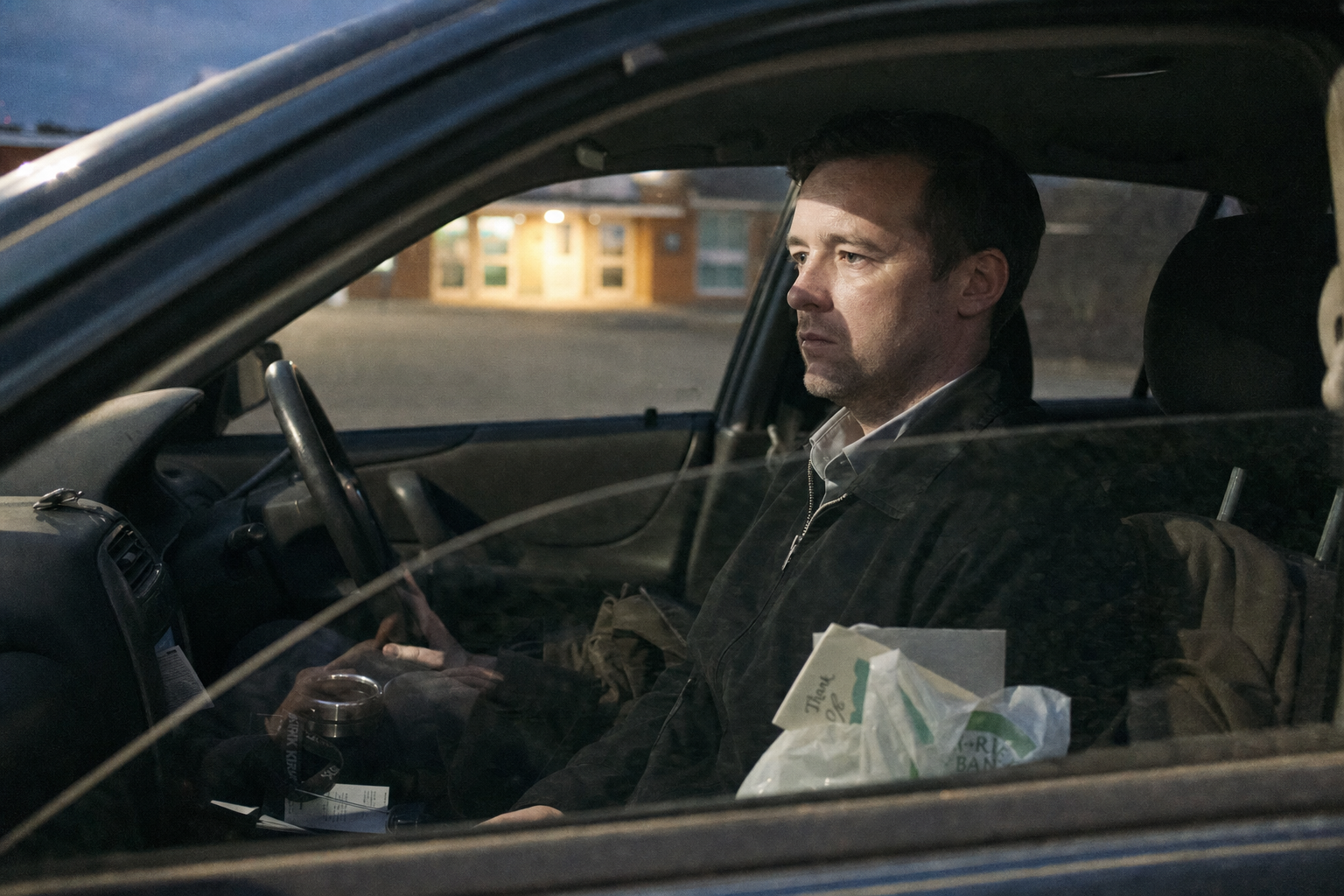
You are halfway through saying something and you can already hear how it sounds. Not to you. To the person in front of you. There is the part of you talking, and just behind it, a second part stood back a little, watching, marking the whole thing as it goes.
That second part is the tiring one. Not the conversation. The quiet commentary running alongside it.
It reads faces for the smallest flicker. It clocks the pause that went a beat too long, the joke that did not quite land, the word you reached for and missed. It keeps a running score of how you are doing. By the time you are home it has the whole evening on file, and it plays the worst bits back while you are trying to sleep.
You call it being self-aware. It feels more like being followed.
For a lot of people this starts before they have even left the house. You rehearse the first few lines in the car. You picture the room and who will be in it. You plan an exit before you have walked in. Then you get there and the watching takes over, and afterwards you lie awake taking the night apart, certain you said the wrong thing to the one person you wanted to like you.
It costs more than the evening. It is the invitation you leave on read because working out a reply is its own ordeal. It is the good news you play down so nobody looks too closely. It is going quiet in a group, not because you have nothing to say, but because saying it means being watched, and the watching is the part you cannot face.
Most people assume the problem is the people. The room full of them, the eyes, the being looked at. So the advice arrives on cue. Just be yourself. Nobody is thinking about you half as much as you think. Fake the confidence until it turns real.
None of it reaches the thing that is actually happening. The trouble was never the people in front of you. It is the one stood off to the side. You.
What the watching is really for
Somewhere back, being seen came with a cost. Maybe a laugh at your expense that landed harder than anyone knew. Maybe a parent who corrected you in front of other people. Maybe a stretch of years where the wrong word or the wrong face marked you out and you paid for it. You were young, you were watched, and it did not go well.
So a part of you took a job. It stepped outside and started watching you first. If it could catch the mistake before anyone else did, you would be ready. You could fix your face, soften the line, get ahead of the judgement before it arrived.
At the time that was not weakness. It was clever. It was a young person working out how to stay safe in a place that did not feel safe, and it worked well enough that you are still standing.
The problem is that it never clocked off. The watcher is still on shift. It does not know the danger has passed, because nobody ever told it. So it keeps doing the only thing it was trained to do, in every meeting, every group chat, every ordinary word by the kettle at work.
You are not shy. You are working a second job in every room, and it never sends anyone home.
This is why the standard advice slides off. Telling yourself nobody is really watching is true, and it changes nothing, because the watcher is not waiting on the facts. It is not weighing up this room. It is braced for an older one. You can know, fully, that these people are kind and still feel your chest tighten as you walk in, because the part keeping guard was never listening to your reasoning in the first place.
And you cannot just be yourself on command, because there are two of you in the room. One trying to talk. One standing over the first, checking its work. Being told to relax is being handed a job the watching will not let you take.
I work with people who dread the very things they also want. The leaving-do for someone they like. The first day at a job they worked hard to get. The reunion, the group they have been asked to join, the meet-up they keep almost going to and then not. They are not cold and they are not antisocial. They want to be in it. They are just tired before they arrive, because for them arriving means switching the watcher on.
What changes is not the room and not the people. It is the wiring underneath the watching. When the part standing guard finally takes in that the old danger is over, it has less to do. It does not vanish on command and you do not argue it into retirement. It stands down when the thing it was guarding against stops registering as a live threat.
When that happens, the second self goes quiet. You are not performing being relaxed. There is simply less of you stood outside, keeping score. You hear more of what is actually said, because you are not busy narrating yourself as you say it. The evening stops needing a review afterwards, because you were in it while it happened, not above it taking notes.
It shows up in how close you let people get, too. When a part of you is always performing, the version of you other people meet is the managed one. Warm enough, careful, a little held back. People can like that version for years and never quite reach you, and you can feel the gap without being able to name it.
You notice the change first in small ways. A conversation you do not replay on the drive home. A silence you let sit without rushing to fill it. A moment where you catch that you were just talking, just there, and the commentary had gone quiet without you asking it to.
That is the shift. Not more confidence bolted on top of the fear. Less of the fear underneath, so there is nothing left to perform over.
You get to be in the evening, not stood off to the side of it, keeping score.

Subscribe to our newsletter