The creative block that has nothing to do with ideas
Creative block is not about ideas or discipline. It is your nervous system flagging an old prediction about what happens when you put yourself in the work.

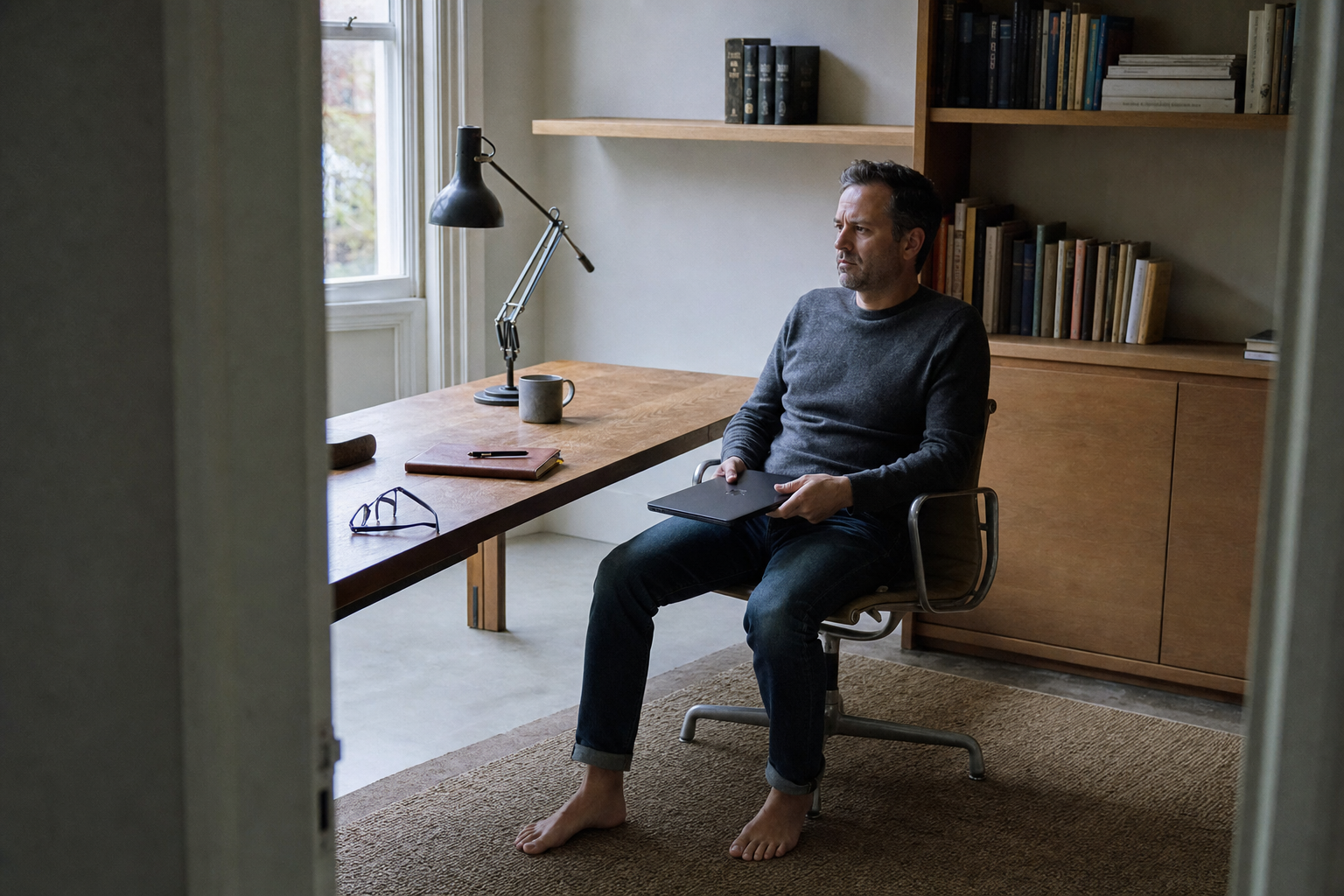
You sit down to start it. The thing you said you would do this week. You open the laptop. You open the document. The cursor blinks.
Then you check your inbox. Then your phone. Then the fridge. You decide the desk needs to be tidied first. You decide you will start after lunch. After the next meeting. Tomorrow.
By the end of the day you have done a hundred small things. None of them the thing.
You tell yourself it is discipline. You tell yourself it is focus. You will set a timer. You will block the calendar. You will wake up earlier. You will find your motivation.
None of it works. Or it works for two days, then collapses.
Creative block is not about ideas. It is about safety.
You can describe the project in detail. You can tell a friend exactly what the work needs to be. The plan is there. The capacity is there. The ideas are there. In some honest moment, the will is there too.
What is not there is the capacity to put yourself into the work. To make the first mark. To commit something to a page that can then be looked at by someone else.
That is the part that stalls. Not the ideation. The exposure.
The handbrake operates beneath conscious choice
Creative work, real creative work, requires you to make something that did not exist before and then stand next to it. The page becomes evidence. The decision becomes a record. The output becomes something that could be judged, refused, missed, dismissed.
Your nervous system is not stupid. It has read the room.
Somewhere along the line, putting your work into the open got linked to a feeling. A teacher's comment in front of the class. A parent who never quite looked at the drawing. A boss whose silence taught you that effort and reception are uncoupled. A moment, much earlier, when being seen at all was the moment you started getting it wrong.
That feeling registered. It got stored.
Now every time the work asks for the same gesture, exposing what is in you to what is out there, the body recognises the pattern and pulls the handbrake.
You call it procrastination. Your body calls it protection.
This is why every January resolution does not survive February. This is why the productivity app you swore by last quarter is sitting unused. This is why the morning routine that was going to fix everything dies on day nine. The conscious mind makes the decision to start. The body, working on much older information, overrides the decision before the hand reaches the keyboard.
Discipline does not touch the storage
The advice you have been given assumes the friction lives at the surface. Tidy the desk. Block the calendar. Two minutes a day. Habit stacking. Atomic this. Atomic that.
None of it touches the storage. The storage is what is doing the work. The storage is a thirty-year-old prediction about what happens when you put yourself into something visible. Until that prediction shifts, every productivity system becomes another shape your avoidance can wear. You will be the most organised person in the world who still cannot start.
Discipline operates on conscious choice. The handbrake operates beneath it. The two are not the same circuit.
The worst part is that the systems make you feel responsible for the failure. You bought the journal. You did the morning routine for three weeks. You blocked Tuesday afternoon. You still did not start. So now you have block plus shame. That is two things to manage instead of one.
You can spot the storage operating in real time if you look. The chest tightens the moment the document opens. The throat closes a fraction. The breath shortens. You read the symptoms as boredom or laziness. They are neither. They are the body bracing for a threat it has met before.
The threat is not the work. The threat is the implication of the work. That if you put it down, someone could see what you are made of. And what you are made of, in the body's older estimation, was once a problem.
I work with people who have tried every system. The notebooks, the apps, the morning routines, the accountability partners, the silent retreats, the dopamine fasts. They still cannot start. Underneath the system fatigue is almost always a much earlier moment when showing up got linked to a cost. The fix is not in the system. It is in the moment. It is in what the body learned there.
When the body learns it is safe to be seen
When the storage shifts, something different happens at the desk. The cursor still blinks. But the blink no longer feels like a threat. It feels like a blank page. Neutral. Available.
Starting becomes a small physical act, not a high-stakes event. You begin. It is not particularly noble. It is not particularly hard. It just happens.
This is the part most people do not believe until they have lived it. They assume the relief, if it comes, will come from finally being motivated, or finally being disciplined, or finally finding the right system. None of those happen. What happens is much quieter. The threat just leaves the desk. You sit down and the body does not flinch.
The work itself often surprises you. People who had blocked for years discover the block was never about ability. The ability was sitting there. The body had been keeping it away from the desk.
The interesting bit is what else moves. People who could not start the work often could not ask for things either, could not put their name on a piece of writing, could not let a friend see what they were really thinking about. The block on the page was just the place it showed up loudest. When the prediction underneath changes, every one of those places opens slightly.
If you sit down to start the thing and your body finds a hundred reasons to do something else, the issue is probably not your discipline. It is something the body learned, long before this project, about what happens when you put yourself into the work.

Subscribe to our newsletter