When forgetting for an hour feels like a betrayal
You laughed for the first time in months and felt caught. The guilt that arrives on the good days after a loss is not disloyalty. It is something older.

It was a Tuesday. Something on the radio was funny, and you laughed before you had time to decide whether you were allowed to.
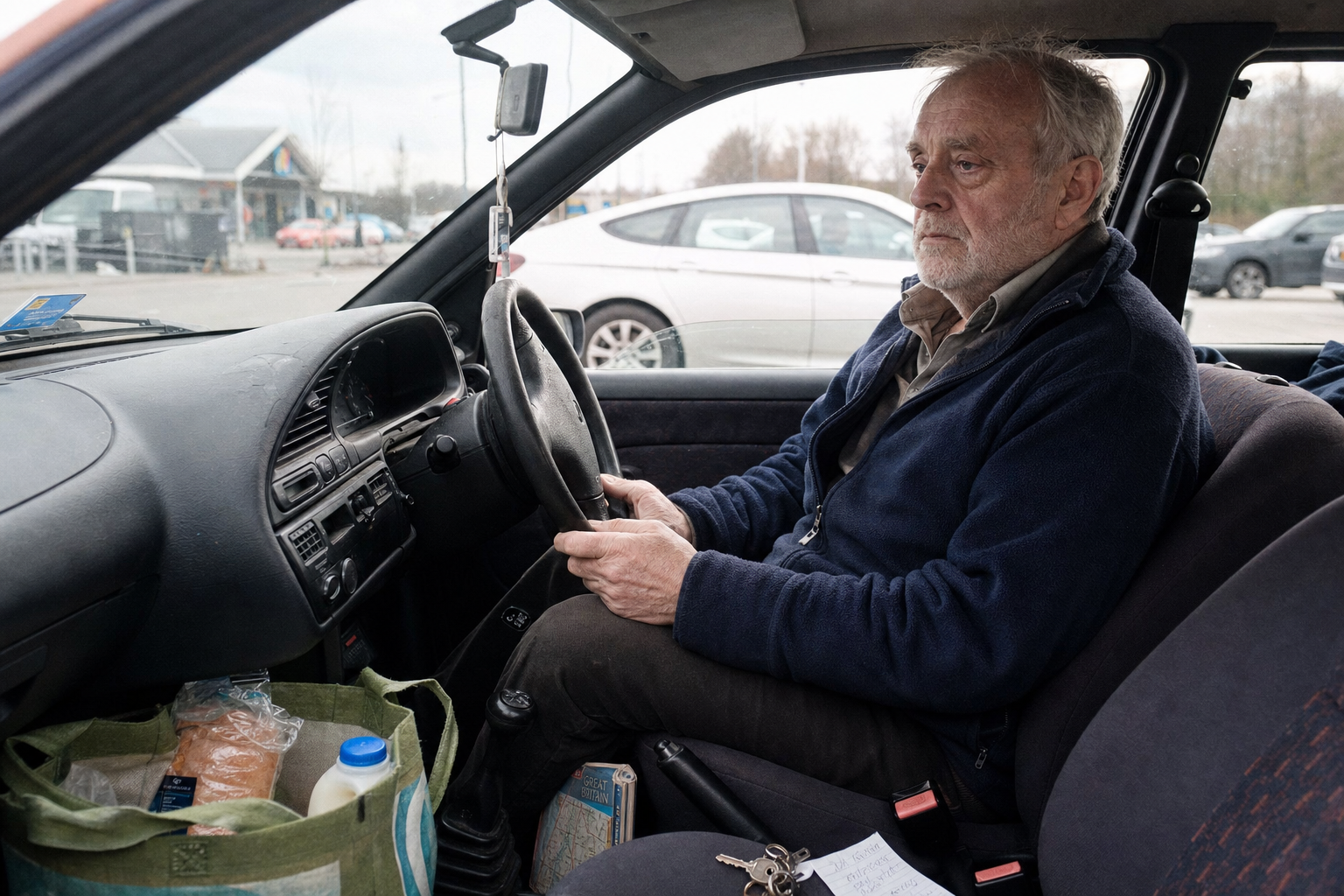
Then it landed. Not sadness. Something worse than sadness. A drop through the stomach, heat coming up the neck, the specific feeling of having been caught at something. You turned the radio down. You sat in the supermarket car park with your hands still on the wheel, and you could not have explained to anyone what had just gone wrong.
Nothing had gone wrong. You laughed. That was the whole of it.
But for eleven seconds you had forgotten, and the forgetting is the part you cannot forgive.
This is one of the least talked about pieces of losing someone. You get warned about the crying. Nobody warns you about the guilt that only ever shows up on the good days. The first proper night's sleep. The meal you actually tasted. The forty minutes at work when you were just working, and not a person carrying something. Each one arrives with a small bill attached.
So you start doing things that look strange from the outside and make perfect sense from the inside. You cut the laugh short. You brace before anything good. You turn down the invitation you might have enjoyed and tell yourself you are not up to it, when the truer thing is that you are frightened of what enjoying it would say about you.
Here is what is going on underneath.
Since they died, the pain has been the one place they are still reliably present. Everything else has been thinning out. Their voice is harder to hear now than it was in the first month. The coat stopped smelling of them a while ago. The chair got moved. The world went back to work and stopped mentioning them, and the phone stopped ringing with people who wanted to talk about them. Almost everything that held them has faded, or been kindly put away by someone trying to help.
The ache has not faded. The ache is exact. It arrives with their name on it, every single time.
So the ache becomes the last thing you have that is unmistakably about them. And you guard it. Not on purpose, and never in words. But something in you has worked out that this hurt is the last thing still holding the two of you together, and it is not about to let go of it.
The ache is the last place they are still reliably found. Of course you are not going to put it down.
Underneath that sits a piece of arithmetic you would never say out loud, because said out loud it sounds mad. If I am happy, I did not love them enough. If I can laugh on a Tuesday, they cannot have mattered as much as I said they did. The size of the pain has quietly become the measure of the love. Which means easing the pain looks exactly like shrinking the love.
That is why the guilt is so precise about its timing. It does not fire when you are crying. It fires when you are fine. It has one job, and the job is to stop the love from getting smaller.
I work with people who are years past a loss and still cannot let a good day stand without paying for it afterwards, and not one of them has ever been able to tell me who set the price.
People will tell you that they would have wanted you to be happy. It is true. It is almost always true. It does almost nothing, and everyone saying it can see that it does almost nothing.
Because you are not confused about what they would have wanted. You know. You could give the speech yourself. The part of you standing guard is not making a claim about their wishes. It is holding a post. It was put there without your say-so, somewhere in the first raw weeks when nothing could be considered and everything had to be survived, and it has been standing there ever since, and it does not take instructions from the part of you that reads about grief at midnight.
That is what most advice about loss walks straight past. Grief is not a set of beliefs you can correct. It is a set of responses that formed at a time when you were in no state to form anything carefully. You cannot reason with the guard. You can only reach the level it was posted on.
Nobody decided to make the pain the proof. It happened while you were too broken to notice you were deciding anything.
It wears different faces. A man in his sixties who has not taken a whole evening off since his wife died, three years ago now. A daughter who feels faintly sick every time she enjoys her own life, because her mother did not get to finish hers. Somebody who lost a brother at nineteen and has spent twenty years being careful never to look too happy in front of the family, in case it reads as having got over it. Same machinery underneath. Different lives built around it.
When this shifts, and it does shift, the change is not that you miss them less. People are frightened of that, and they are right to be careful about it, and it is not what happens. You miss them exactly as much. What goes is the tax.
The good day arrives and it does not cost anything afterwards. The laugh finishes on its own, in its own time, instead of being cut off at the knees. You get an ordinary afternoon without an audit at the end of it.
And the part nobody tells you is that they come closer, not further away. Because you are no longer only able to reach them through the worst thing that ever happened to you. You can think about them on a good day. You can remember something funny they did and simply have it, without the whole weight arriving behind it. That is what people are reaching for when they say the grief changes shape. It stops being the only way back to them.
The love was never measured in how much it hurts. It is in the fact that you are still here, years on, missing someone long after the world stopped asking about them. No laugh is strong enough to undo that. Nothing is.
You did not lose them again on Tuesday. You laughed on Tuesday. Those are not the same event, and only one of them ever happened.

Subscribe to our newsletter