Why a smell or a sound can put you straight back in the worst day of your life
A frightening memory is often stored as sensation with no date on it. Here is what a trigger does in the body, in order, and what I do about it using EMDR.

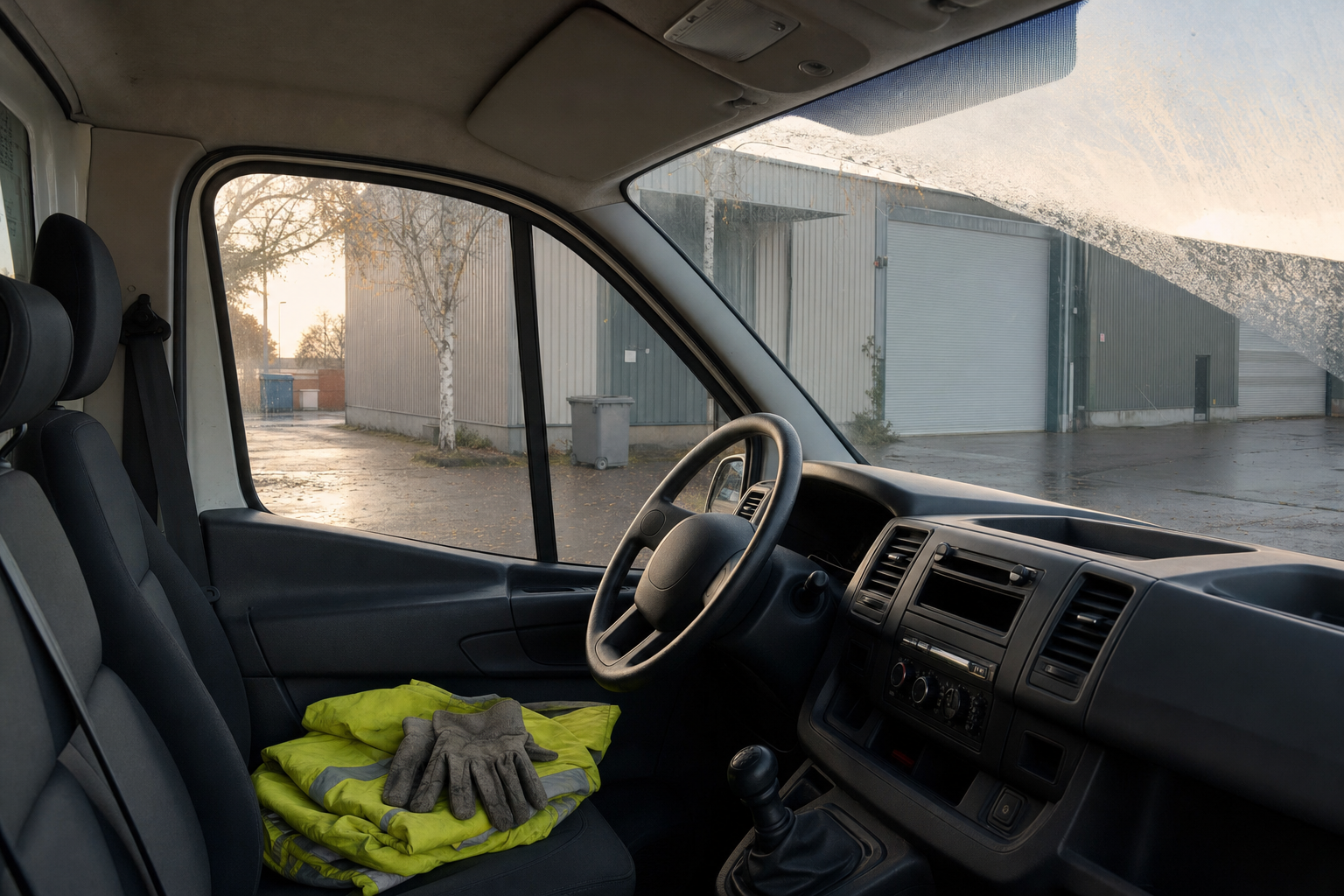
An engine note from the lane beside you, or the smell of hot brakes at a junction, and your hands go cold. Your chest tightens, and the thought of the collision arrives a moment later.
That order is the whole explanation. The body reacts first, and the memory, if it turns up at all, arrives afterwards. What follows is what is going on, in the sequence it happens.
Start with how an ordinary memory is kept. It comes with labels: when, where, what came before and after. You can say it was a Tuesday, some years ago, on a particular road, and it stays in the past where it belongs. That is why you can talk about a holiday from ten years back without your pulse changing.
How a frightening memory is stored
A frightening event is often laid down differently. One leading account in psychology, Chris Brewin's dual representation model, describes two kinds of trace. The first is the verbal memory: the story you can tell, with a time and place attached. The second is a sensory trace: images, sounds, smells and body feelings, kept in pieces and loosely tied to when they happened.
The idea is that in real danger the mind is busy with survival, so sights, sounds and smells go in as raw sensation, filed loosely. It is a theory, and the exact brain mechanisms are still debated. It fits what people describe to me closely.
A frightening memory can be stored as raw sensation, undated, so the body reacts as if it is happening now.
A flashback is the sensory trace firing without the label that says this was then. It is felt as now, in the cab, at this junction. Telling yourself it is over speaks to the part that holds the date, while the part that is firing holds only sensation.
The sensory trace reports that moment accurately, down to the sound and the smell. Only the date is missing.
What happens in the first few seconds
Something in the present matches a piece of that trace: an engine note, a smell, a tone of voice. A similar engine note will do, and so will a similar hour of the day. The trace holds fragments, so a fragment is enough to set it off.
Smell is especially quick: its pathway has unusually direct links to the amygdala and hippocampus, the brain areas involved in emotion and memory. Reviews describe smell as a traumatic reminder in PTSD.
A tone of voice works in the same way. A particular flatness or sharpness in how someone speaks can match the trace of a moment from that day, and the body answers the tone before the words have registered.
The body responds before the thinking part of the brain has caught up. Heart rate rises, breathing changes, muscles tighten, and there is an urge to brace or get out. People say it to me in nearly the same words: "my body knew before I did".
Cold hands and a tight chest are part of the same alarm: the body getting ready to act. The thinking mind turns up a moment later and does its best. You know you are parked outside a depot with the radio on. Knowing helps, but the body stays switched on for a while anyway, and most people end up annoyed with themselves for it.
It is an alarm that learned its lesson well and keeps sounding until something tells it the road is clear.
Most people expect a flashback to be a film. When they describe theirs to me, it is cold hands, a tight chest and a jaw clamped shut, all of it in the body. Afterwards comes the flat hour: tired, and short with whoever they get home to. Some see it as a separate problem from the collision, and some decide they are simply a nervous person now.
People often tell me it goes off in the safest places, in a queue at the shop or in the kitchen with the kettle on, and that makes them trust themselves less.
Many have quietly built workarounds: a different route, the radio turned up, the window shut against the smell of other people's brakes. They mention these almost as an aside, around the tenth minute.
The trigger itself usually takes a while to find. When I ask what sets it off, the first answer is usually a general one. A few minutes later it comes out: the engine note, the brake smell, or a song that was on that morning, said out loud for the first time.
The body reacts to the engine note first. The story about the crash arrives a moment later.
I also see the list of triggers widen over time. One engine note becomes any engine note of that kind, then the stretch of road, then the time of day. Most people only notice the widening in hindsight, once an ordinary stretch of the day has started to feel like something to get through.
What I do about it
I start by finding which moments carry the charge. Most people expect me to ask for the whole crash. I ask for far less: what the body does first, which sound or smell it answers to, and which part of the day still plays loudest.
I take time over the preparation. I start on a memory only when you are steady enough for it, and you and I agree what you want to be different, on the road and at home.
For the moments that carry the charge I use EMDR, which stands for eye movement desensitisation and reprocessing. I move my hand from side to side, you follow it with your eyes while holding one of those moments in mind, and the memory is gradually reprocessed. The aim is for it to sit in the past and carry less charge.
NICE recommends trauma-focused therapy, including EMDR, for PTSD in adults. The sessions themselves are quiet: the hand moves, you follow it, and I check in with you between each set of movements.
Between sessions, people notice the triggers as they come, and that is useful. The week tells me which moments still carry charge and which have quietened.
I work with the memories you already have. I cannot tell you how long it takes. What tends to change first is how quickly the body settles afterwards.

Subscribe to our newsletter