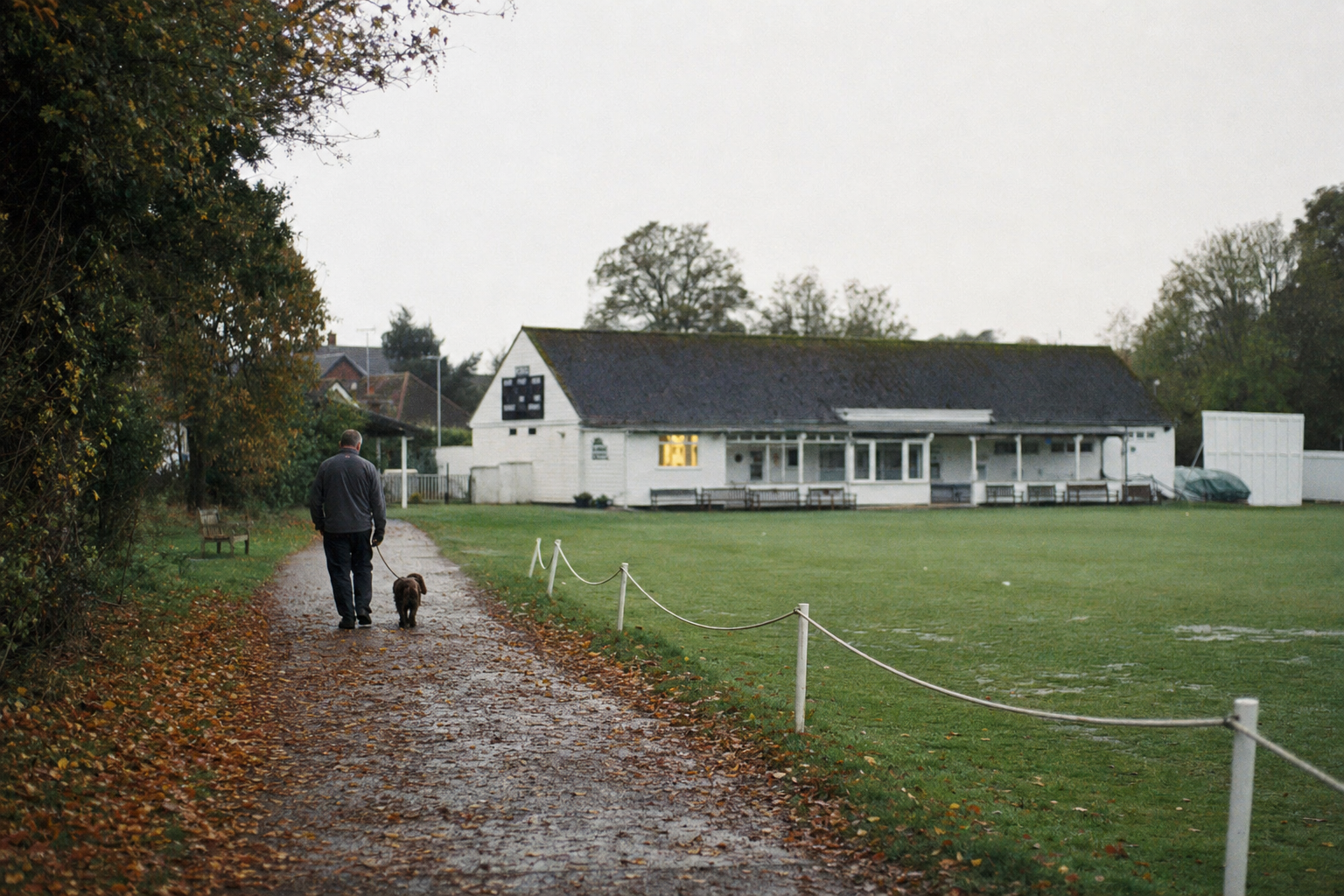
The places really have closed. That is not the whole reason you stay in.
The places to gather really have thinned out. That is true, and it is not the whole reason you stay in. What runs before the room, and what changes it.


You used to see people without arranging it. Not friends exactly. The same faces on a Tuesday. The bloke behind the counter who knew what you were having. Whoever happened to be in.
None of it was planned. That was the whole of why it worked.
The argument doing the rounds now is that those places have gone. The third place, the one that was neither home nor work. The pub, the club, the church hall, the smoking area outside the office, the shop where somebody knew your name. Shut, priced out, or quietly replaced by something you can do on your own.
The argument is broadly right, and the numbers behind it are not soft. Around a quarter of adults across the world say they are lonely. One in five has nobody they would call a close friend. The share of men with no close friends at all has multiplied several times over since 1990.
You can watch how it happened without reading a study. The shopping arrives at the door. Work moved into the spare room. The checkout scans itself. Every one of those is a small convenience, and every one of them removed a short exchange that nobody at the time would have called social.
The contact that built friendships was mostly a by-product of having to be somewhere.
So when people say the structures have thinned, they are not inventing it. Having fewer people around you at fifty than you had at twenty-five is not a character flaw. Something outside you actually changed, and a lot of people needed the blame taking off them.
Most of the people I work with can list a dozen things they used to do and cannot give one clear reason they stopped.
They are not short of invitations either. That is the part the shortage story does not cover.
What another room does not reach
If the whole of it were supply, more rooms would fix it. Put on the club night, open the community space, start the walking group, and the people who need it would fill it. Some do. Plenty do not, and the ones who do not are usually the ones it was built for.
There is a real thing underneath the practice argument, mind. Being around people is a skill, and it thins out when it goes unused. Go long enough without the small exchanges and the big ones start to feel like work. That much is true, and doing more of it does help.
It is also why so many people have quietly concluded there is something wrong with them. That they were always this way. That they have gone antisocial, or lost the knack, or left it too late to start again. The story arrives ready-made and it fits well enough to keep.
The message arrives and something drops. You do not decide not to go. You notice you have already started looking for a reason, and the reason is always a good one.
Some of it is plain enough. By six you are tired in a way rest does not fix, and being company for anybody is past what you have got left.
Some of it is money. An evening out costs what it costs now, and staying in is free.
And some of it is older than either. Long before the door there is the deciding. You rehearse the whole evening before it happens: who will be there, what you will say, how soon you can decently leave.
By the time the night comes round you have already been to it once, and it did not go well.
Every one of those reasons is true, which is what makes them so hard to argue with. The tiredness is real. The money is real. The evening genuinely might go the way you think it will. None of it explains why the same answer comes out of you every time.
There is a second thing the shortage story misses. Filling a room does not deliver the thing people are actually short of. You can spend a whole evening in company and come home without having been asked one real question. Being in the room is not the same as being listened to properly.
Which is why the number of people in your week tells you almost nothing about how alone you feel inside it.
You are reachable all day and rarely reached, and that is a different problem from having nobody there at all.
The advice that comes with the shortage story is to put yourself out there. Say yes more. Join something. Get off the phone and into a room.
It works, for the people whose only problem was the shortage of rooms.
For everybody else it lands in the wrong place, because what stops them starts before the room does.
What stops them starts before the room does.
What is running is a prediction. At some point you learned what tends to happen when you show up. You will be the one carrying the conversation. You will be the one nobody quite turns towards. You will get home and go back through everything you said.
It was not made up out of nothing. It was learned somewhere, often young, in rooms where turning up genuinely did cost you something. It was accurate at the time. It has simply never been asked to check again.
The prediction does not announce itself as a prediction. It gets there before the thought does, and it turns up as a very good reason.
Which is why it does not shift by being explained. You can know the whole of it, name the year it started, and still watch yourself send the message that gets you out of Saturday.
It changes when the prediction is proved wrong where it was made. Not once. Often enough that the body stops getting ready.
What that looks like is unremarkable. A few evenings that were fine. One conversation where you were the one being asked. Nothing anybody would tell a story about, repeated until the bracing stops arriving ahead of the invitation.
That takes longer than joining something, and less time than most people expect.
The places are worth having back. They were never going to answer the rest of it.

Subscribe to our newsletter