Why you check the mirror again before you go out
The second look in the hall mirror was never a measurement. What gets asked at the door is whether you will be acceptable today, filed under the body.

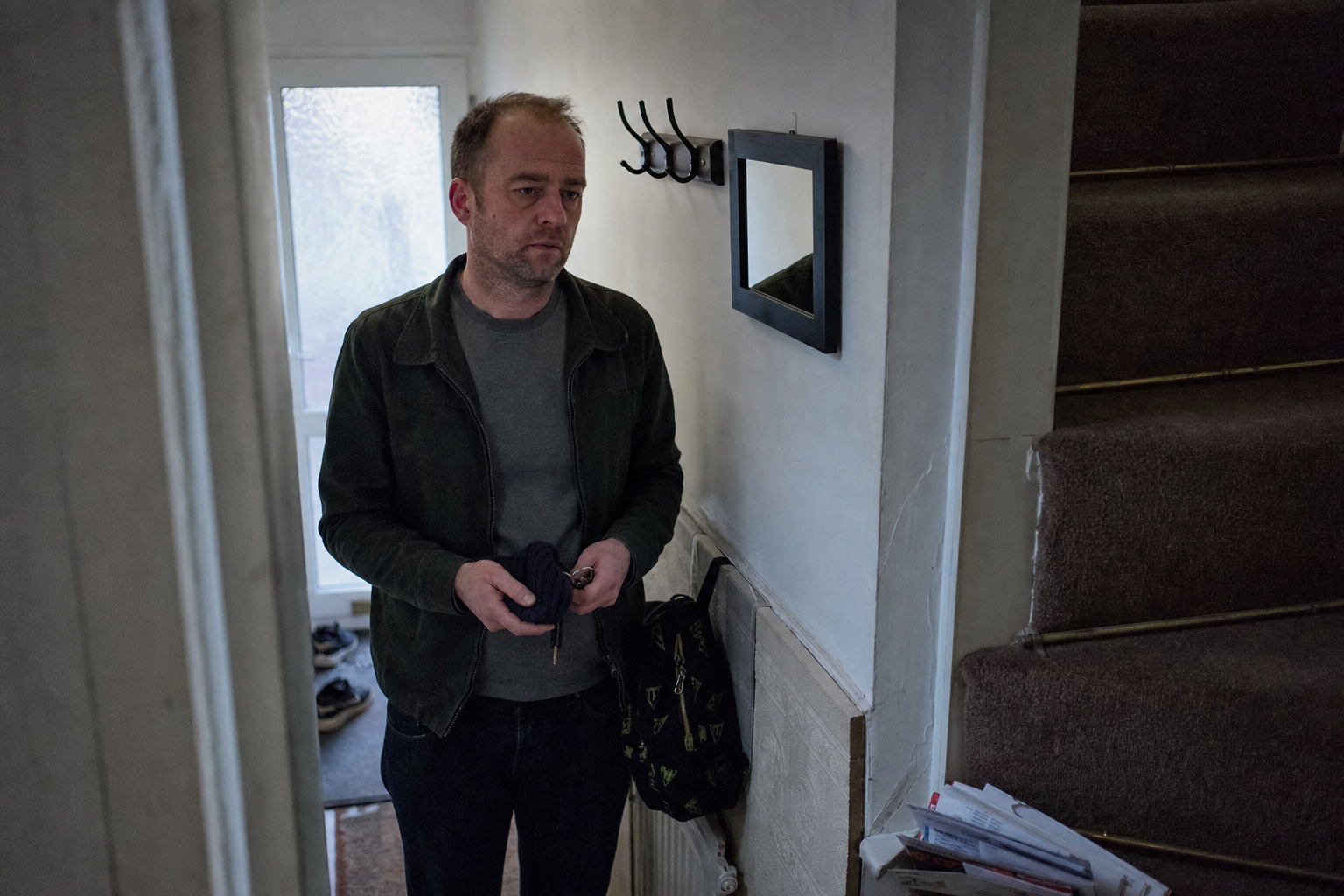
There is a mirror in the hall, and there is a rule about it.
You look once on the way past, which is nothing, and then you look again at the door. The second look is the one that matters. It takes about four seconds, and it has never once changed what you are wearing.
You do it anyway.
Not every day. On the days when you are seeing people you have not seen in a while, or going somewhere there will be photographs, or walking into a room where you already know who is going to be in it. Then the hall mirror gets used twice, and sometimes there is a third look in the car, in the sun visor, which does not count because nobody can see you do it.
The rest of it you barely register. The shop window on the high street, checked sideways without slowing down. The front camera, opened and closed. Turning slightly when somebody lifts a phone. Taking the seat with your back to the room. Keeping a jacket on inside a warm house for two hours, because taking it off is a decision you would rather not make in front of anyone.
And the photograph afterwards, the one somebody posts. You scan yourself first. Before you look at who you were with, or what the day was, you find your own body in the frame and you assess it, and then you decide how you feel about the whole afternoon.
The story you have about this is that it is about the body.
A stone, or the hair, or the thing about your arms. Sort that and the checking stops, because there will be nothing left to check.
It is a reasonable theory. It is also the one part of this that can actually be tested, and it has been, by a great many people who went and changed the thing.
They get to the weight. Or the surgery goes well, or the hair comes back, or the clothes finally sit the way they were supposed to. And for a few weeks it is genuinely better.
Then the checking finds somewhere else to land.
The neck now. Or the skin. Or how you look from the side, which had never occurred to you before and is now permanent. The behaviour does not go. It relocates, quietly, to whatever is nearest.
That part surprises people more than anything else. I work with people who got the body they spent four years on, and the second look was still at the door waiting for them, asking the same thing about a different part.
Because the second look was never a measurement.
Nothing is being measured. You already know what you look like. You had the information before you left the bathroom, and four seconds in a hall mirror adds nothing to it.
What the look does is bring something down for a moment.
There is a small, real drop in discomfort when you check. It is quick and it is unreliable and it lasts roughly as long as the doorway. That is why it repeats. Anything that takes the edge off, even briefly, gets learned, and it gets learned fastest when the relief is small and the situation comes round again tomorrow.
So the checking is doing a job. It is not vanity, whatever you have called it privately, and it is not a lack of discipline.
It is answering a question, and the question is older than the body it keeps getting asked about.
You can see the shape of it in the timing. The checking is worst before the thing, not during it. The evening out, the wedding, the first day at the new place. It starts the night before, in bed, with a full rehearsal of who will be there and what they will notice, so that by the time you are standing in the hall you have already been to the event twice. The worry that starts the night before is doing most of the work here. The mirror is only where it gets asked out loud.
Which is why the usual advice does so little.
Stand in front of the mirror and name three things you like. Cover the mirrors for a month. Follow different accounts. Be kinder to yourself, which is the one everybody offers and nobody can act on.
None of it is bad advice, and some of it helps at the edges. Following accounts that are not quietly selling you a body is a straightforwardly good idea. But telling yourself you look fine only ever reaches the part of you that was already willing to agree. The part doing the checking is not in that conversation. It is not listening for a compliment. It is waiting to find out whether today is a day you get away with it.
That is what is actually being asked at the door, and it was never a question about appearance.
Somewhere fairly early, before you had any say in it, you learned that being looked at carries a risk. Perhaps somebody in the house was commented on and you watched it land. Perhaps it was you, and it was meant kindly, and it landed anyway. Perhaps it was one remark at school that got repeated by enough people for long enough that it stopped being a remark and became a fact.
Whatever it was, a rule came out of it. Being seen is a test. You can fail it. Failing it costs you something you cannot afford to lose.
That rule sits below the level you can argue with, and nothing has revised it since it was written.
The question at the door is whether you are going to be acceptable today. The body is only where that question got filed, because the body is the part of you other people can see.
The mirror never answers. That is why you keep going back to it.
A mirror can tell you about a collar. It cannot tell you whether you will be alright in a room, because it knows nothing about the room, or about the people in it, or about what you are braced for them to think.
So you get four seconds of something that resembles reassurance, and it is gone by the pavement.
What shifts this is not more effort at the door. People have been trying effort at the door for twenty years. It is the rule underneath that has to move, the one that turned being seen into a test, and that rule does not respond to argument, or to willpower, or to a better mirror.
When it does move, the change is not that you start liking how you look. People expect that, and it is not what happens.
What happens is smaller and stranger than that. You get to the door and you go out.
Not because you decided not to look. Because the question stopped arriving, and there was nothing at the door left to answer.
People who stop checking almost never notice the day it stopped. It is not an event. It is an absence, and absences are difficult to date.

Subscribe to our newsletter