The cold plunge trains you for the wrong kind of shock
Cold plunges give a real lift. The claim that they build resilience for life's harder shocks holds up less well. What cold water trains, and what it cannot.

The idea is a good one, and it goes like this.
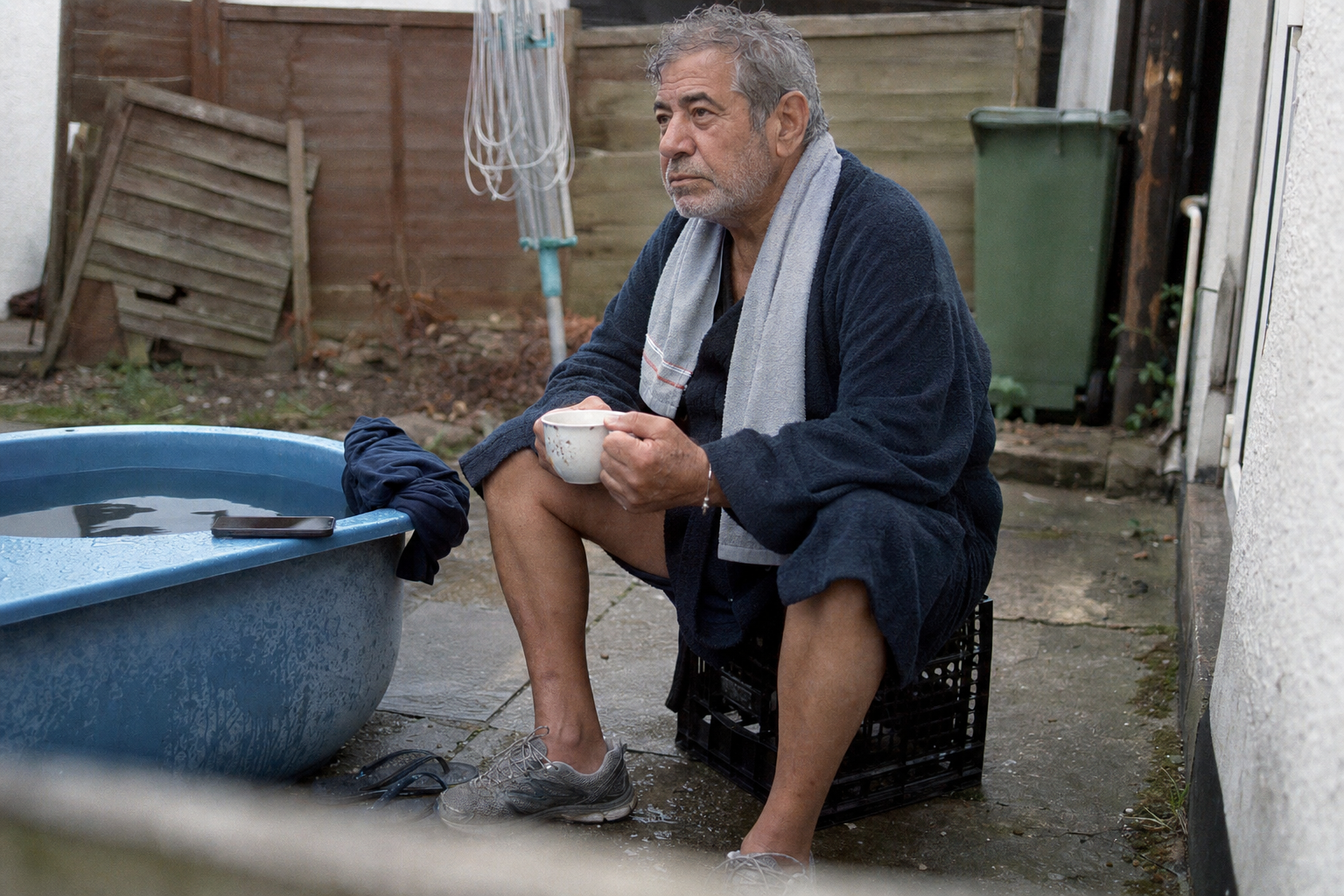
Every morning you step into water cold enough to lock your chest. Everything in you says get out. You stay. You breathe slowly through it for two or three minutes, then climb out shaking and oddly bright.
Do that often enough, the thinking goes, and you are teaching your nervous system that discomfort can be survived. The next time life throws something hard at you, you will already know how to stay in it.
It is a persuasive story. It has a clean logic, a daily ritual and a result you can feel within minutes. It has also travelled a long way from ice baths for athletes. Plastic tubs in back gardens. Cold showers with a timer on the phone. Small groups walking into the sea at seven on a Tuesday in February.
A fair amount of it holds up.
The lift is real. People come out of cold water more awake and, for a while, calmer. A large review of cold-water studies published last year found people reported lower stress some hours after a session, and some slept better. For someone whose mornings used to start with the phone and a knot in the stomach, three minutes that cannot be spent worrying is not nothing.
The ritual matters too, and it is easy to underrate. A reason to get up. Something done before the day has had a chance to go wrong. For the sea swimmers, other people to stand shivering next to and laugh with afterwards. Plenty of people have found something good in this, and it would be wrong to tell them otherwise.
The part that holds up less well is the promise that it carries over.
A review in a leading psychiatry journal this year was fairly plain about it. The short-term changes in mood are there. The evidence for lasting benefit to mental health is still thin. That is not a verdict against the practice. It is a note about what it can reasonably be asked to do.
There is also a simple reason the carry-over is harder than it sounds.
The cold is a very particular kind of shock. You choose it. You know exactly when it starts, and you know it ends in three minutes because you set the timer yourself. Nothing about it means anything. The water does not think less of you. It will not still be there at three in the morning.
Almost nothing that frightens people in ordinary life works like that.
The letter from the hospital asking you to ring. The manager who wants a quick word at four. The son who has not answered his phone since Saturday. The rent going up again. None of these were chosen, none of them come with an end time, and every one of them means something. That meaning is what the dread is made of: what the moment might say about your safety, your worth, or the people you love.
Staying still in cold water trains you to override a reflex. Most of what keeps people awake is not a reflex. It is a prediction.
A prediction does not live in the skin. It lives in what you learned, often a long time ago, about what happens next when things go wrong. If you grew up in a house where a raised voice meant the evening was over, your body will brace at a raised voice in a meeting at forty-five, however many cold showers you have taken. The plunge teaches your breath to slow in the water. It does not teach you that the raised voice is safe.
The cold forces the mind into the present for ninety seconds. That is exactly why it feels so good, and exactly why it does not last.
This is why so many people find the lift has gone by mid-morning. The worry was never cancelled. It was waiting on the bench with the towel.
None of that makes the practice worthless. It makes it a good start to the day, not a treatment. It only becomes a problem when it is asked to be the treatment, when someone whose worry runs the whole day is told that a bit more discipline in the mornings will sort it, and then blames themselves when it does not.
Discipline is rarely what is missing. Most people who take this up are already disciplined to a fault.
For some of them the plunge arrives as one more thing to get right. Up at six, into the tub, then work, then the children, then the house, then the parent who needs visiting. When you are already running on empty, a new daily discipline is not always resilience. Sometimes it is another way of proving you can take more.
Most advice about resilience assumes the problem is a lack of tolerance, that you simply need more practice at being uncomfortable. It gets wrong where the discomfort comes from. Most people are already tolerating a great deal. What wears them down is not an inability to take the hit. It is the same hit, predicted over and over, by a part of them that has never been told the danger has passed.
The same gap runs under a lot of the wellness world at the moment. Breathwork, supplements, sleep scores, cold water. Each one is good at settling the body in the moment. Each one tends to leave alone whatever keeps setting the body off, which is exactly what a nervous-system reset leaves untouched as well.
I work with people who are often very good at enduring. A care worker who can sit through anything on shift and cannot sit through a quiet evening at home. A man who drives a bin lorry, swims in the sea every Sunday, and still goes tight in the chest when a certain name comes up on his phone. A woman back from maternity leave who gets through everything on the list and feels, underneath, that something is about to go wrong. What shifts for them is rarely their tolerance. It is the prediction.
When the prediction changes, the same moments land differently. The letter from the hospital is still unwelcome, but it is a letter, not a verdict. The quick word at four is a conversation. The body still reacts a little, and then it settles, without being talked down or held under water.
Other things tend to ease at the same time. The short fuse with the family on a Sunday evening goes quieter, because it was never really about Sunday evening. Sleep comes more easily, because there is less to rehearse.
If you enjoy the cold, there is no reason to stop. It is a good way to start a day, and good starts are worth having.
The water will be just as cold tomorrow. It was never the part you were afraid of.

Subscribe to our newsletter